The album can retread familiar ground with varying impact but the whole stands as an inspiring introduction to the songwriter’s project.
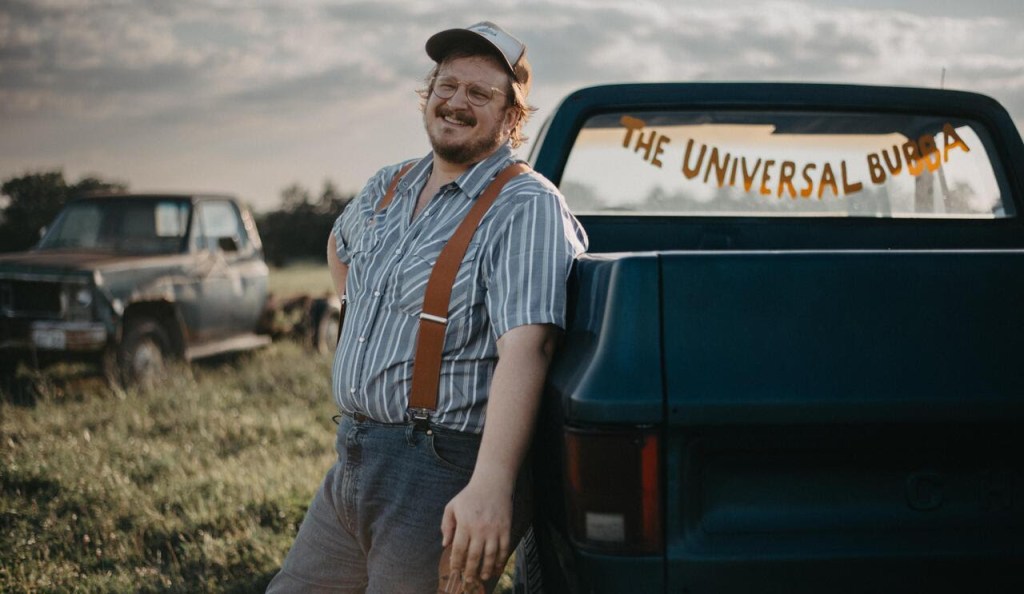
Willi Carlisle is on a run of albums which together stake a strong claim to his being one of the most vital songwriters of the 21st Century. Operating across a breadth of American folk and country styles, his records typically weave themes of political injustice and resistance, the beauty and pains of love in all its forms and roadworn reflections on the landscapes and oxymorons of postmodern America. Carlisle’s unforgettable live presence has driven a steadily growing word-of-mouth reputation. This year, however, the narrative surrounding the release of a new double album, ‘The Universal Bubba’, has positioned him on the cusp of a bigger breakthrough, particularly given the involvement of Tyler Childers on production. The album’s singles, like ‘Gas Station’ and ‘Marlboro Vinyasa’, seemed to lean into this, emphasising a polished full-band country rock sound which, in its radio friendliness, might have been in danger of seeming a little anonymous. Thankfully, however, there is much more to this record than an appeal to convert the mainstream to Carlisle’s work. Indeed, this country rock sound is something that has always lurked within his music but never been fully realised, so it is interesting to hear it play out amid what is ultimately a maximalist patchwork of country and folk styles, from Appalachian folk and Cajun onestep to more modern gothic country timbres. Some songs seem to retread themes familiar from previous albums ‘Critterland’, ‘Peculiar, Missouri’ and, to a lesser extent, ‘Winged Victory’. Nevertheless, there are also a good many candidates for instant Carlisle classic status here and even the weaker tunes offer up affirming revelations and gems of one-liners. The result feels like an introductory digest for new listeners, while seasoned fans will find the clearest distillation so far of the importance of community as the mechanism for prevailing in the familiar struggles of late capitalist society which have long animated Carlisle’s project.
It is worth first reflecting on this sense of self-repetition, which means that for Carlisle’s existing fans, ‘The Universal Bubba’ feels slow to find its feet. The opening three tracks – ‘The Mason Jar At The Centre of the Universe’, ‘Use Me Up’ and ‘Gas Station’– each amalgamate themes and situations familiar from previous records. Ambivalence towards American traditionalism and an exploration of tangled, troubled relationships are two central themes of ‘Critterland’, while a poetics of the ‘vanlife’ defined ‘Peculiar, Missouri’. Later track ‘Contact High’ similarly feels like an amped up composite of some of the stories which emerge across ‘Critterland’, especially ‘Jaybird’ and ‘When The Pills Wear Off’. If you have heard that record, the climaxes of this new cut may feel a little dulled. Elsewhere, many melodies and song structures recur from earlier records to the extent that it can be hard to tune into what is new about them. This is not to say that the songs in themselves are at all bad, and perhaps we will look back and appreciate how these refinements and reinventions played out across records show the honing of Carlisle’s craft. Right now, however, they can feel somewhat redundant and dilute the album’s more original additions to Carlisle’s rich discography.
‘Good Morning Midnight’ provides the first taste of the distinct contribution of this record. Here, Carlisle makes the album’s best use of the expanded and electric band setup for a welcome update on the barroom honky tonk song, previously presumed to have died its protracted death amid the excesses of late-twentieth century outlaw country. The song toasts a life lived under barroom neon lights, but Carlisle looks past the alcoholism, violence and adultery usually valourised by this form. In doing so, he spotlights the lives of those there either by financial or spiritual necessity, the entertainers and night workers living precariously in opposition to a mainstream society which has no place for them. This tune kicks off the best run on the album. Up next, ‘Malboro Vinyasa’ kaleidoscopically portrays the awkward oxymorons of contemporary American liberal culture, summed up by the fact that, ‘The last place you can smoke inside has free yoga on a Saturday night’. The tune challenges the disingenuousness and alienating effects of such manifestations of a long Me Decade while eloquently holding out hope that this could still serve as a source of spiritual salvation and common understanding.
Following this, another highlight in ‘Master’s Hammer’ brings a taste of Carlisle’s aptitude within more traditional stylings. Over picked banjo, three verses proceed through hopelessness towards awareness and action to form a map of how the workers of this world might see beyond the pervasive dual force of capitalism and climate despair to forge resistance through solidarity. This sets up perfectly for the vision of leftist vigilante righteousness laid out by title track ‘The Universal Bubba’. This tune is split into two parts though the first outshines the second, living up to its placement as the album’s centrepiece in its perfectly executed elucidation of its central themes. In just over four minutes, Carlisle traces the despair and succour of working class American life through contrasting vivid portraits (ranging from an ageing Vietnam vet to a Catholic school outcast playing Fugazi and George Jones on a Line 6 amp). All this is filtered through the same neon lit optimism established by ‘Good Morning Midnight’, as Carlisle valourises roadside preachers and barroom pickers and any individual ‘doing it for themselves’ in spit of the dulling draining mechanisms of the modern American society.
Sides three and four of the record are defined by more personal reflections, which bring a human focus to the political project laid out for the most part on earlier tracks. The change is signalled by ‘She Only Loves Horses’, which provides comic respite after the two parts of ‘The Universal Bubba’ and lands right up there with Jonathan Richman’s ‘Since She Started To Ride’ in that peculiar canon. This and another lighthearted offering, ‘Sadly Enormous’ (and Enormously Sad), both hold up to repeat listens, often the test of whether a comedy song amounts only to one good gag or something more enduring. ‘Red Leather, Yellow Leather’ is similarly rich in gratuitous wordplay, out of which is built a charming love song that counterbalances the stinging lovelorn ‘I Ain’t Crazy’. Then Cajun-style dance tune ‘Old Milwaukee Onestep’ adds yet another texture to this maximalist undertaking, anchored by the gloriously Carlisleian refrain, ‘Lord please protect me from the things that I love’.
At length, we arrive at ‘Golden Dragon Buffet’, a fitting closer which muses on love, life and friendship. The song impressionistically collates echoes of ideas played out across the record, tempered by imagery drawn from the titular restaurant. There is something perfectly human about this comfort food communion closing a record whose most consistent message is that solidarity and individual acts of resistance are our strongest sources of hope in a bleak and frightening world run by exploitation. This has long been a theme of Carlisle’s work, but with a record organised around looking out for the ‘universal bubbas’ who could inspire our salvation it comes through most powerfully. On a record that does at times feel like a digest of Carlisle’s previous work to date, it is this which sets it apart as a project with its own distinct purpose.
With polished Tyler Childers production and the attendant opportunity to reach a new audience, this album could easily have become a dilution of what has made Willi Carlisle such an important voice in recent years. Early singles which added little to the insights of previous records threatened to confirm this fear. Not one to compromise, however, Carlisle has instead channelled his energy into his most sprawling project to date, reviving some familiar ideas while trying out a load more. Ultimately, we can take heart that any concessions made for this project, from the rehashing of old ideas in radio-friendly tones to algorithm-friendly Instagram reels of new tunes, are steps towards the welcome expansion of Carlisle’s idiosyncratic Romantic queer eco-socialist platform. With Carlisle seeking to make the most of the opportunity to make his most ambitious and high-budget record to date, ‘The Universal Bubba’ constantly insists upon itself. He leans hard into the possibilities of its country rock sound while jumping down all manner of other stylistic rabbit holes, leaving behind breadcrumbs of clever and carefully intentioned lyrics which thread the whole thing together into a powerful statement of hard-fought optimism.