Ahead of the release of debut album ‘What’s In Between’, Noah Learmonth talks about coming of age, cinema, and moving to London.
“Truth exists between two things, whether that is between two words or between people. Music is there to express that various in-betweenness.” Radio Free Alice’s lead singer, Noah Learomonth, pauses for a second. “That’s a fucked sentence,” he laughs.
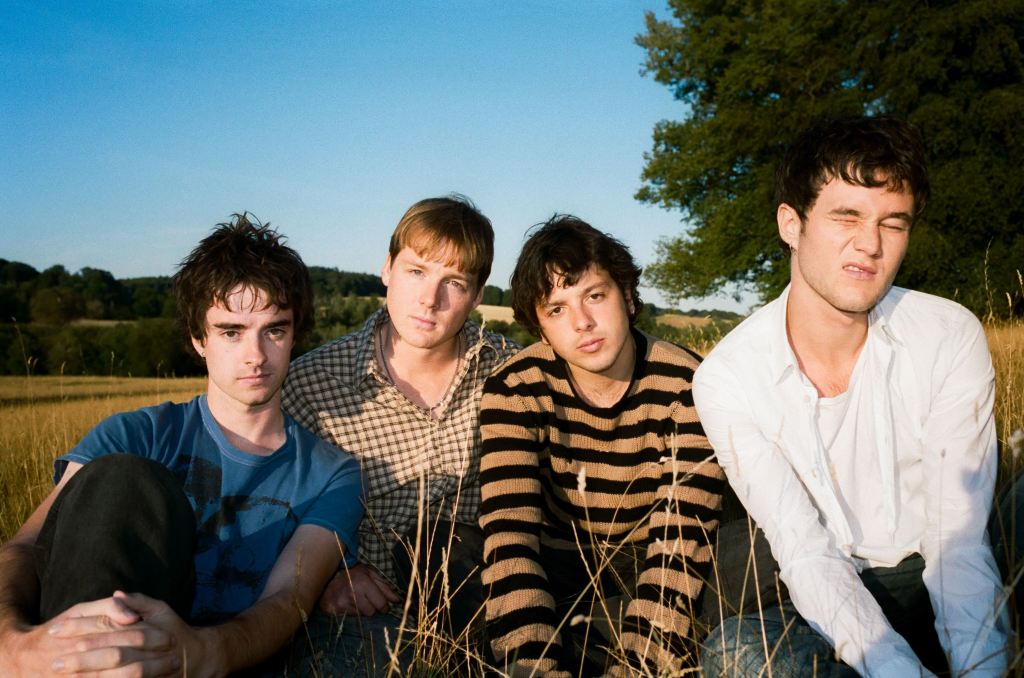
Radio Free Alice embrace that uncertainty of in-betweenness on their debut album ‘What’s In Between’, out 30 October via Atlantic Records. Looking back on adolescence, its 11 tracks are steeped in longing, distance, and the people left behind. Shimmering guitar melodies meet dissonant edges, carrying a bittersweet sense of nostalgia that never quite settles into comfort. The Melbourne four-piece comprises Learmonth (vocals and guitar), Jules Paradiso (guitar), Michael Philips (bass and saxophone), and Lochie Dowd (drums).
“There’s a coming-of-age quality to the album; adolescence is very much an in-between state between the end of your childhood and starting your life.” Learmonth continues, “Coming-of-age is done badly a lot, especially in movies, but when it’s done well, oh my god – it rips you to shreds when it’s done well. When I think back, the period of my life when I fell most in love with music, film, and books was when I was a teenager.”
“I have a new obsession every few months.”
The record carries something of that teenage experience of discovering what stays with you, shaping how you see the world long after the moment has passed. “I have a new obsession every few months, and each of them leaves a mark”, he explains. Learmonth looks down and smiles softly as he speaks. “This is such a cliche and obvious answer for me, but when I discovered The Smiths at fifteen, I felt so validated. I thought, ‘I don’t even need to go to school anymore, if I just listen to The Smiths, it will all fall into place.’”
If The Smiths once offered an escape from the world around him, his relationship with music has since taken on a more obsessive quality, returning to certain songs until he feels he has drained them of everything they have to give. “Right now, I am obsessed with the band Low. There’s a song called ‘Just Make It Stop’ that I have listened to at least 10 times a day for the past 2 weeks. I get like that with songs. I vampirically completely suck it to pieces until I’ll never be able to listen to it again. I am probably four listens away from never being able to listen to it again.”
His relationship with music has always been one of deep attachment, but certain artists have offered more than something to get lost in; some have made the idea of making music himself feel possible. “Discovering Belle and Sebastian was a huge moment for me. It felt like songs that were meant for me, and it also felt like songs that were very within reach; it felt like I could write songs like that. And [Stuart Murdoch] can’t really sing in a conventionally impressive way, and I felt like that.”
“I like songs that feel like stories.”
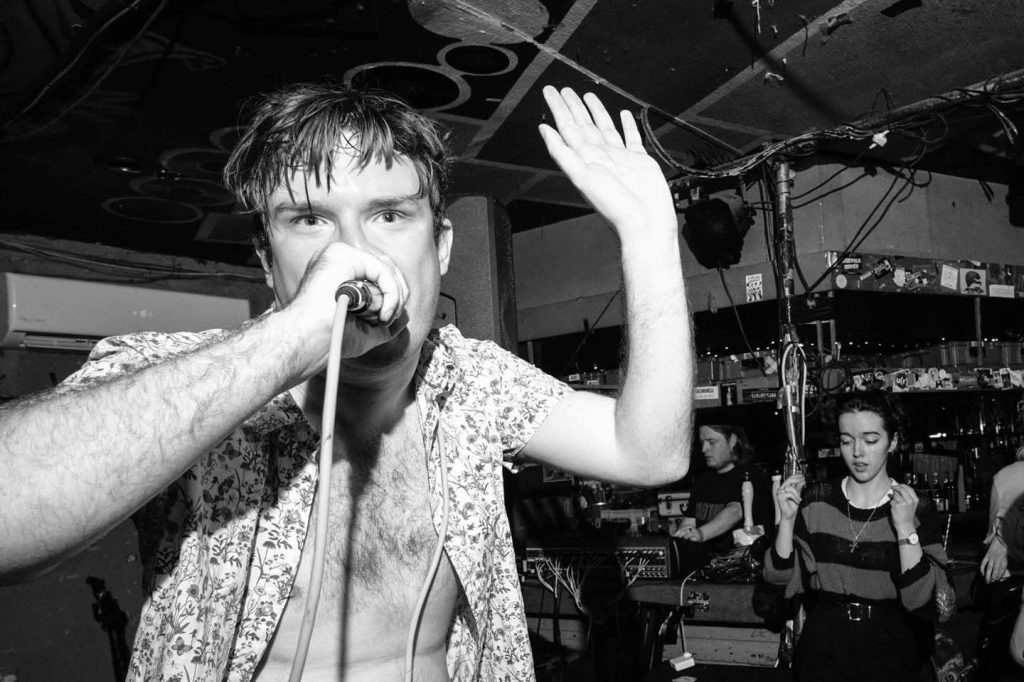
This sense of possibility has carried into his own songwriting, though the process is perhaps less romantic than the finished songs might suggest. The lyrics, he explains, tend to come together at the very last minute. “Everything gets done long before the lyrics. I am quite lazy, so it’s a bit like ‘Shit, we’ve got to go into the studio and record this for real’, and then I will properly write them.” There is something tender about the way Learmonth holds his head in his hands as he exposes his habits. “We will play the songs live for months, and I will improvise the lyrics. They will be different every night before the song gets released,” he says.
“[Writing lyrics] always starts with a first line that is said spontaneously, and that line becomes the beginning of the story. I like songs that feel like stories about characters going through something rather than earnest musings. I love Jarvis Cocker and Stuart Murdoch; I love the way when you listen to a song by one of the bands, you step into a movie about this character.”
Film, in particular, offers Learmonth another way of imagining the album, even if he does not necessarily see his own music in visual terms. There are certain films, he explains, that feel intrinsically connected to the record. “There are certain movies where I think, ‘If this record were a movie, it would be this movie’ – the sort of movies like ‘The Year My Voice Broke’.”
That connection does not extend to music videos, however. “To be totally honest, I don’t think about music visually, and when it comes to making music videos and visualisers, emotionally, I don’t get that,” he admits. He is even reluctant to watch videos for songs he loves, wary that a visual interpretation might alter how he hears them. “I’ve got this thing about music videos where I think they can ruin the music for me. There are instances where videos have made songs better, but most of the time, not.”
It is a curious distinction for someone so inspired by cinema, though Learmonth is quick to separate his love of film from the process of making music. “I am interested in film, so I want the videos to be good. I have friends who, whilst writing songs, think about the video because they see the song visually, but I just don’t do that.”
Asked which film he would choose to score if given the chance, his answer points towards the kind of tonal freedom that seems to appeal to him as a songwriter. “‘Happiness’ by Todd Solondz, I would love to score that. It’s a really fucking good movie, and there is a lot of room for weirdness, poppiness and irony in the soundtrack.”
“We never do anything deliberately. It’s very instinctual, and then we look back at what it’s become.”
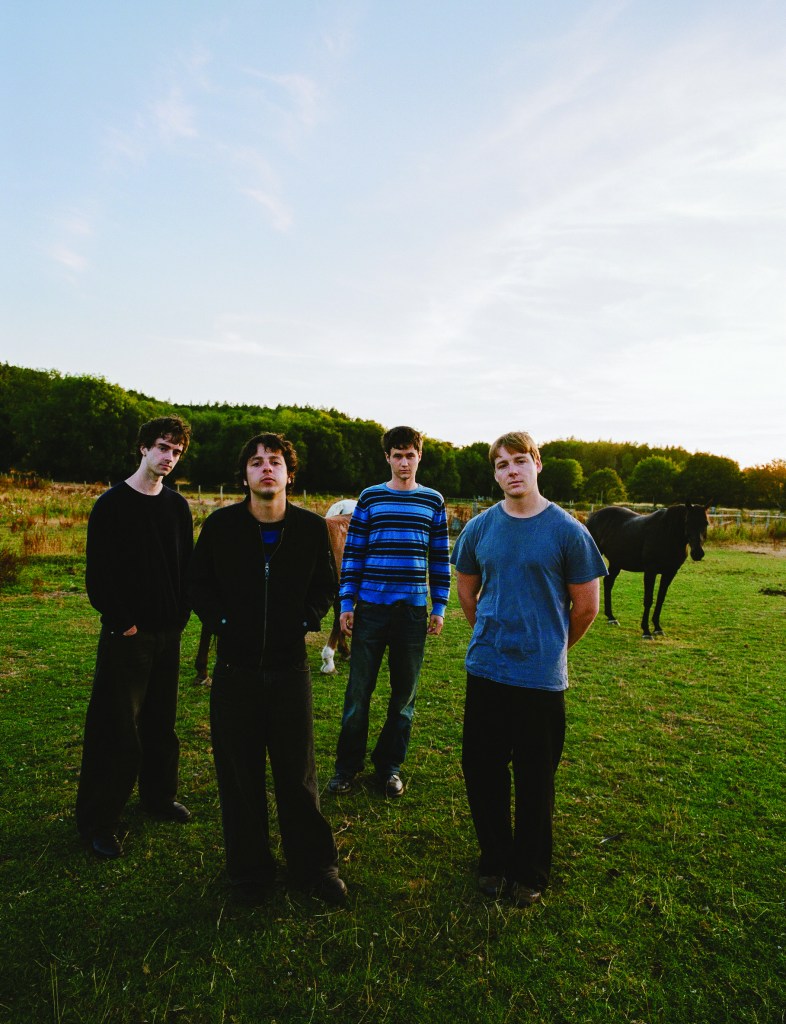
For all his attentiveness to the craft of others, Learmonth speaks about his own music with a disarming lack of deliberation, as though the songs take shape before he has the chance to decide what they should become. “We never make any decisions intentionally or do anything deliberately. It’s very instinctual, and then we look back at what it’s become,” he explains. Perhaps that instinct also gives the band room to outgrow their influences, approaching familiar sounds with enough curiosity to take them somewhere unexpected.
“When we first wrote ‘Kick in the Shins,’ it sounded shamefully like The Smiths. A few years ago, we would have leaned into that, but now we went ‘Let’s pretend it doesn’t sound like The Smiths’, which allowed us to experiment with it and pull it away from that comparison.” A searing guitar melody slices through melodiously restrained vocals, which deliver lines that feel at once vulnerable and confrontational.
Despite months spent recording the album, with most tracks making it through two separate versions, Learmonth has not quite exhausted his attachment to the songs. Asked which of his own tracks he would take to a desert island, he settles on ‘Undressed’ without hesitation. “It is the one I find myself going back to listen to the most. I like the lyrics and the way my vocal melody changes. It is melodic in this confident way.”
That confidence came together under less-than-ideal conditions. Recorded in London during a heatwave, ‘Undressed’ emerged from a session that was never meant to happen. “We were in the room — one meter by one meter — with our shirts off, and we just wrote it in this very spontaneous way. The record had already been finished, and we were six months over schedule, and we just decided to write and record two more songs for some reason,” he shares.
Even the track’s bridge came from somewhere unexpected. “Weirdly, the vocal line of the bridge came from a song I wrote when I was 15 and then I rediscovered it. The songs sort of cannibalise other songs; we find these unreleased songs and take different parts and Frankenstein them together.”
“If we had a Venn diagram of our musical tastes as a band, we would cross over on albums like ‘In Rainbows’ by Radiohead and ‘Is This It’ by The Strokes.”
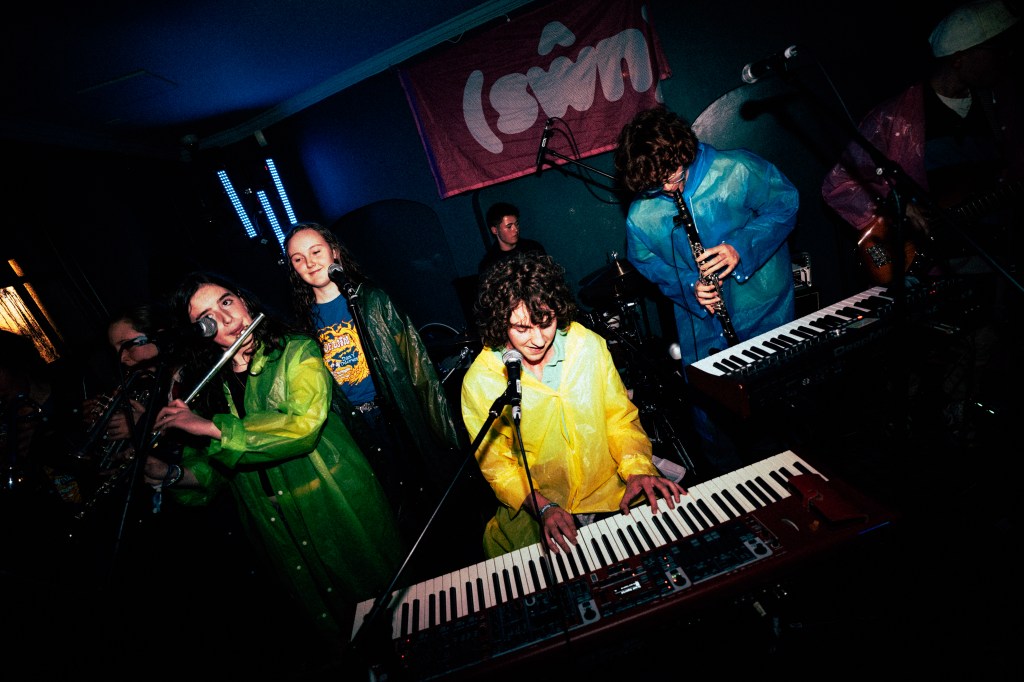
The debut album also marks a specific first for Radio Free Alice, with ‘Big Ideas’ featuring Rachel Brown, one-half of New York experimental duo Water From Your Eyes. Having previously kept their songs within the band, the collaboration grew out of their own admiration for Brown’s work. The track became a rare chance to bring an artist they admired into their world. “We saw Water From Your Eyes play in Melbourne and thought they were really great. We were big fans of the band, and we had this idea for a call-and-response thing with a second vocal when we wrote ‘Big Ideas’. Then we had this crazy idea: what if we got Rachel from Water from Your Eyes to sing on it?” Learmonth explains. “By some miracle, they agreed to do it.”
Having now opened the door to outside voices on a Radio Free Alice track, the question arises of who else they might want to work with. “Can I say Thom Yorke? That might be too much. That might be a bit like writing a pop song with Jesus. I don’t know if I would be able to do that; I would probably lose my confidence.” He pauses for a moment. “I have a better answer. There’s a Sydney band called Shady Nasty, which I think are the best Australian band, maybe of all time. They would be a dream collaboration for us.”
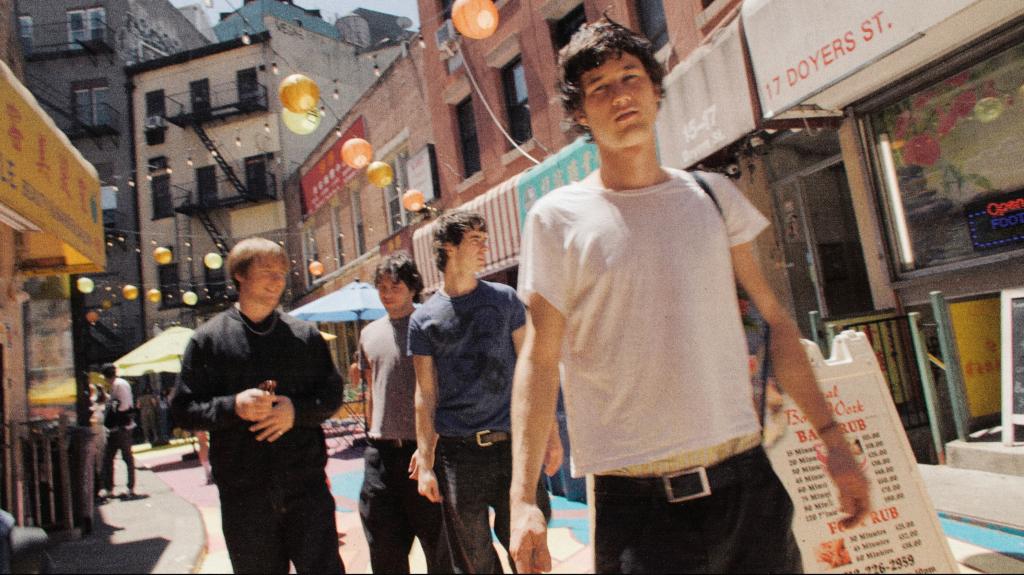
Shady Nasty may be the dream collaboration, but few records hold a similarly sacred place within Radio Free Alice. Some albums carry a significance beyond influence, becoming shared reference points that shape the band’s collective taste. “If we had a Venn diagram of our musical tastes as a band, we would cross over on albums like ‘In Rainbows’ by Radiohead and ‘Is This It’ by The Strokes. They have this kind of biblical reverence for us. If we had to agree on just one album, ‘Is This It’ would probably be the answer; that’s our rock.”

“Since the band’s inception, we have been talking about moving to London.”
Those shared touchstones offer a point of continuity for the Australian band whose life now moves between cities. “With the nature of the job, we never live anywhere, but we are based more in London than Melbourne at the moment.” The move had been a long time coming. “Since the band’s inception, we have been talking about moving to London, and it got to the point where it was so socially embarrassing that I hadn’t moved yet that I felt like I had to,” he laughs.
“I fucking love London. At first, I was overwhelmed and found it a bit lonely, but I made a lot of friends quite quickly. I think a lot of people in London aren’t from London. In the last few months, the city really opened up for me.” Part of that connection comes from the music happening around them. “Guitar music in the UK is in a very healthy place. It is very inspiring to be in that energy, surrounded by so many good bands. We are constantly seeing bands that inspire us to up our game.”
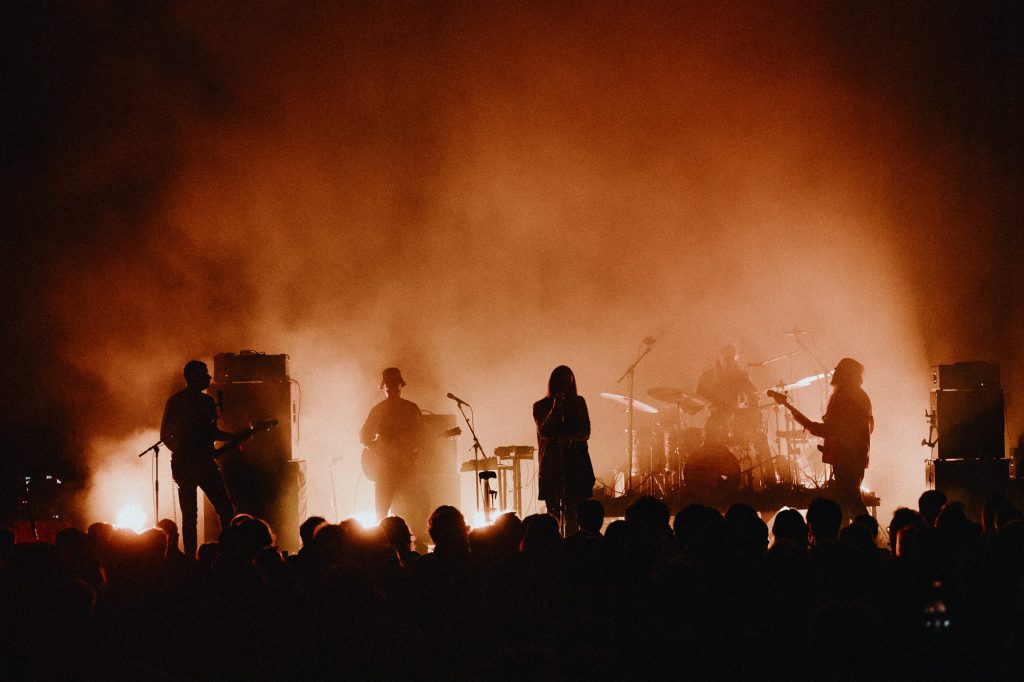
With their debut album, Radio Free Alice bring infectious melodies into collision with pounding drums, dissonant guitar lines and saxophone that adds another layer of tension to the mix. Raw, unvarnished vocals sit at the centre of it all, carrying lyrics that balance wit with an intimacy that catches you off guard. ’What’s In Between’ is neither polished nor resolved, but restless and alive. Built on instinct and sharpened by friction, it holds onto the uncertainty of adolescence without trying to make sense of it too neatly. There is honesty in that refusal to look back and tidy things up, in letting the songs remain caught somewhere between who you were and who you are becoming.