The Manchester post-rock trio on the development of the project, their process and new material on the horizon.
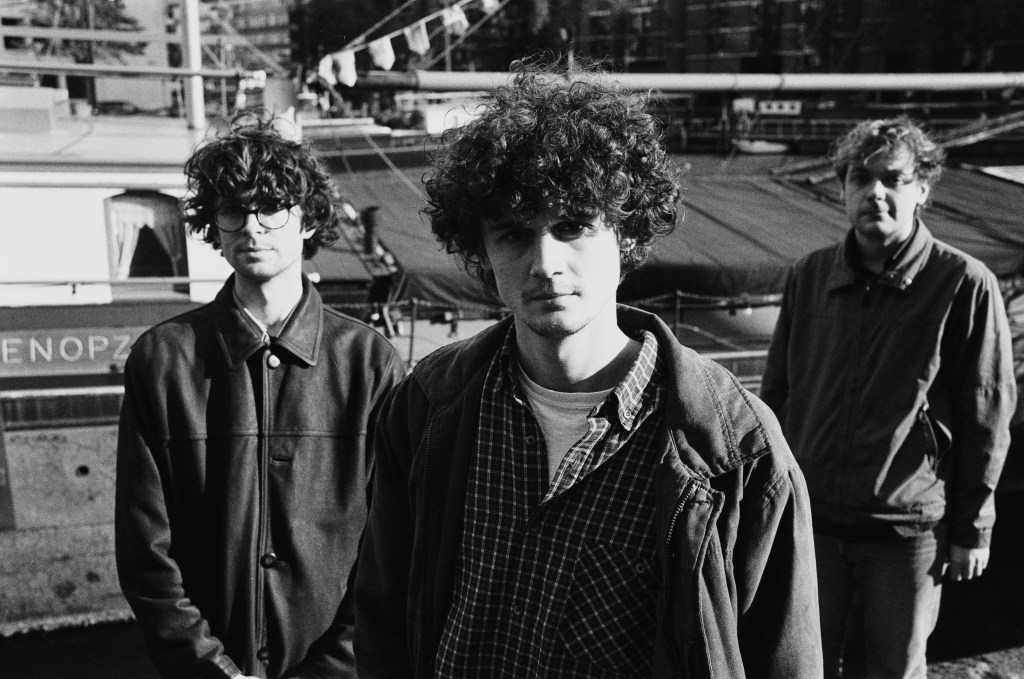
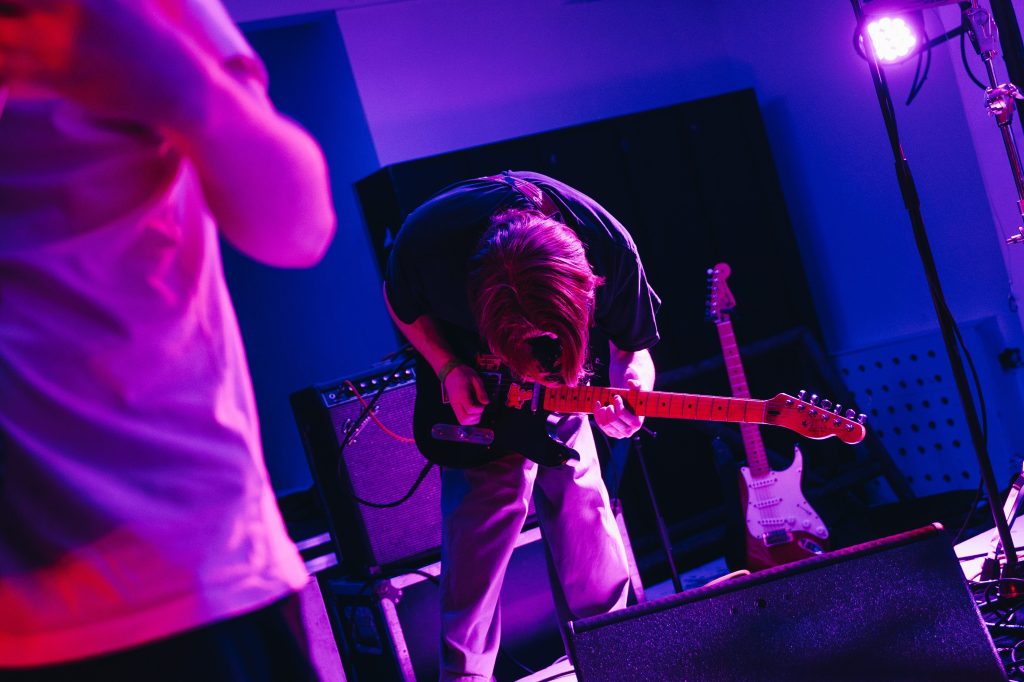
Manchester trio Shaking Hand are among the most electrifying live outfits going in the UK right now. The lineup consists of brothers George Hunter (guitars and vocals) and Freddie Hunter (drums) as well as Ellis Hodgkiss (bass). Out of this elemental setup, they construct elaborate post-rock structures which maximise the power of every element to create atmospheric post-industrial soundscapes. Having released their self-titled debut album in January this year, they have gone on to perform standout sets when we have seen them at The Great Escape and End of the Road in recent months. At the latter we caught the band after their set for a chat about their process and plans for their next trip to the studio. Shaking Hand have just come off a run of UK dates and set off next week for the European leg of their tour. They are then back on the road here at the end of January on a co-headline with ladylike.
First up, could you tell us how the band came together?
George: The first iteration of the project started five years ago. Me and Freddie, we’re brothers so we’ve been playing music together since God knows when. And then Ellis joined the band three years ago. We knew each other from the music scene in Manchester, we were in different bands that used to play the same bills together.
Ellis: I lived round the corner from a pub George worked at [The Rose and Monkey] and I got made redundant. I had a lot of excess cash and unemployment so I was seeing a lot of George!
George: So yeah when me and Freddie were looking for a bass player Alex was the go-to candidate.
Ellis: I’d been to all the shows they’d put on before and really loved it so when they asked me I was ready to go basically.
Was there ever any kind of mission statement or manifesto for the project?
Freddie: I wouldn’t say there was like a statement. It was just, like, enjoying playing together, really. Me and George were jamming all through lockdown and it’s just fun to let loose and create some stuff.
George: I think we learned quite early on that the songs were going to be long. Because we were just trying to cram all these different musical ideas into one thing. So I think we wanted to be brave with song structure, do something a little less normal.
Ellis: A lot of bands will do the same thing where they’ll jam an idea out and it’ll be like ten minutes long or whatever. And in other bands you’ll refine that down to sort of three-to-five minutes. Whereas these guys are just like, ‘Oh we’re just gonna learn that whole ten minutes again and improve bits of it. Don’t cut any of it, it’s too precious!’
Watching you live I am always particularly struck by the resourcefulness of your sound, the way you make the most of each of your three instruments. Has that always been part of the design of your music?
Freddie: I don’t think we think about it while we’re playing but the dynamics are a big thing. I think it’s when we’re jamming we just get bored or something and we’re like, ‘Let’s go really loud in this bit.’ But playing it live and seeing people react to it and applaud halfway through a song is pretty cool!
Ellis: I think one of the things I found when I joined, I was sort of having to learn how they wanted the bass to be used in the songs. There’s a lot of melody in it which is really fun to play. There’s a lot of countermelodies adding extra elements that you can get out of a three-piece.
Do you have any touchstone concepts or mantras you live by creatively? Either something all-encompassing or hyper-specific?
George: I’m pretty stubborn when it comes to pedals, I want to get as much out of a clean tone as possible.
Ellis: I think because so much of it comes from jams in the rehearsal room organically, you don’t really overthink it. I don’t think we go in there like ‘this is how it has to be’ but we’ll know when something doesn’t fit or it sounds a little corny or something.
George: [We’ll] give everything a go, really, and then if we’re not feeling it within thirty seconds we’ll move on to the next thing. And record everything. Especially the jams, it’s so hard to recreate that when you’re not recording it and you try and play it again. The magic’s gone.
What does the process of going back over those recordings look like?
George: Walking around, being on public transport really helps. Or maybe just as I’m going to sleep, give it a listen and sometimes the structures there. And then sometimes you can work out what works well with each other.
Ellis: We’ve got a whiteboard in the rehearsal room and for some of the longer ones someone will write out the structure – with weird names for the sections like ‘diddly bit’ or whatever – we’ll write out the structures like that and that’s always really useful.
Freddie: George is really good at visualising how a song should progress.
George: I can sometimes hear it from the initial recordings, and then it’s just a bit of trial and error, stumbling around until you find the right thing.
Ellis: And there’s no ego between any of us, so if someone suggests something for someone else’s part, no one’s bottom lip comes out.
During your set we heard some new material. Are you already starting to think about your next release?
George: We’ve been doing some demoing, we’ve got seven [tracks] down. We go on tour at the end of the year so we’d like to get like a demoed album done, maybe an hour’s worth of music, before that. And then hopefully in the studio next year and get another album out. We’re always writing and we wanna just keep up the momentum really, we want to be one of them bands that just release when they can.
What are you looking to do differently with these new songs?
George: There were a few on the last album that were already written – ‘Sundance’ and ‘Night Owl’ were bedroom recordings that I did during lockdown. This one’s more collaborative, it’s the three of us coming up with our own ideas.
Ellis: It’s very jammy, a lot of the ideas were quite loose for a while. There’s certain things we’d push, like George is trying new things vocally – not going Celine Dion or anything like that – but he’s pushing the vocals a bit more.
George: Less lazy.
Ellis: Having done the album we can think a bit more about the context of the songs next to each other, which I don’t think we necessarily did as much with the first record.
Freddie: All the parts are quite hard to play. That new one we played today I’m concentrating so hard!
Ellis: I think we’ll do a really complicated second album and then the third album we’re just gonna do like an album of Ramones covers.
As regular readers of ours will know, Manchester’s scene is enjoying an amazing moment right now. How has that influenced your own development?
George: It’s just really inspiring being in a scene where everyone’s pushing it quite a bit. It’s nice going to loads of gigs and being inspired all the time.
Ellis: It’s really nice seeing Manchester at the moment because no one is imitating each other. You can go and see a lineup and it’s all under the same umbrella, but you can see very distinct acts. There’s so many good bands, there’s Martial Arts, Brainleak. And I will say Westside as people have been really good through No Band Is An Island at creating a bit of community. There’s a groupchat for Manchester bands now which… it can descend into memes quite quickly but you do see people using it as a resource, asking for tour advice and stuff like that. That’s really cool. I’ve played in Manchester bands for a while and I don’t remember it ever being this friendly. It was never hostile but… now people really look out for each other.
Shaking Hand are back touring in the UK this January. All upcoming dates listed here.