Ahead of the release of new album ‘Repeat In Reverse’, Soren Bryce talks to us about the DIY scene, creative experimentation and moving beyond punk.
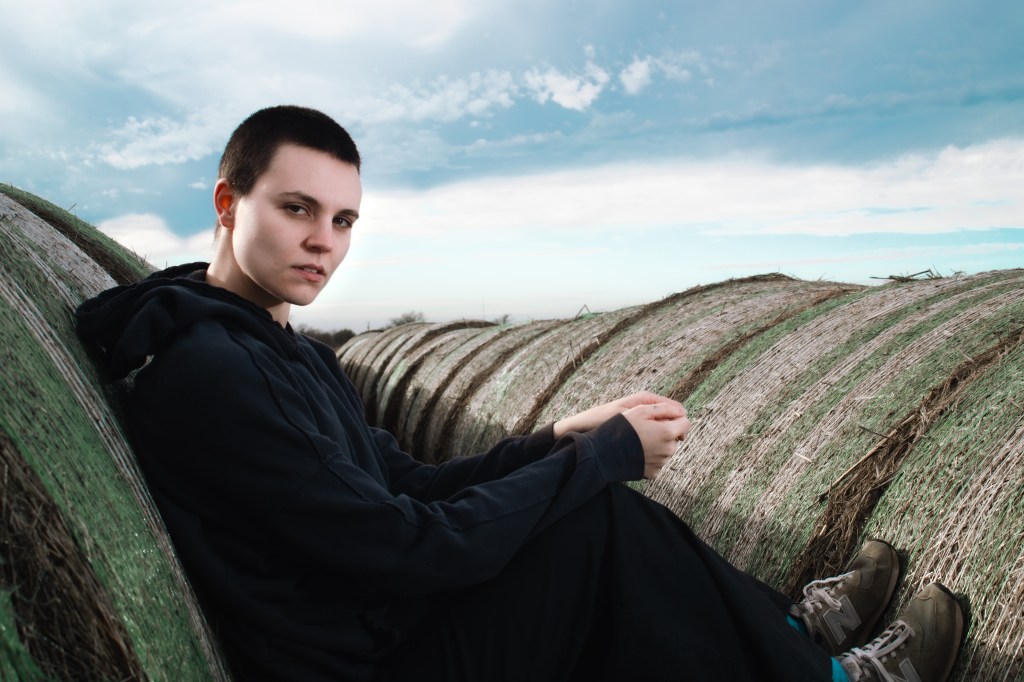
This week, Tummyache release their fourth album ‘Repeat In Reverse’. Having built their reputation through a DIY approach and exploration of societal issues, the band continue to push the boundaries of the underground scene. Ahead of the album’s release we spoke with lead singer and songwriter Soren Bryce about Haruki Murakami, personal loss, and the importance of maintaining and strengthening DIY communities.
Looking ahead to ‘Repeat In Reverse’, are there any new sounds or techniques on the album that you haven’t explored before? On ‘Porcelain Dish’, I noticed what sounded like archival sampling. Am I mistaken, or is that from the U.S. Library of Congress?
Soren: How do you know!? Oh my, we love the U.S. Library of Congress. We’ve been a four-piece for a long time, and because of Bianka’s scheduling, we kind of shifted down to a three-piece, and I had to figure out a way to fill more space. So then I brought in this sort of Vocal FX rig, and that’s almost become the fourth member in a way, so we’ve kind of moved, not, I won’t say electronic because it’s still analogue. Like, I’m running, all the effects on the vocals are happening in real time, live as they’re being applied. It’s not like a sample or like a track or a computer or anything like that. But yeah, the sound’s definitely changed a lot. I would say we are not like a punk band anymore. We’re just older.
Back to the sampling: that’s [taken] from Thomas McGrath’s “My Imaginary Friend.” And it’s just a poem by this guy about his imaginary friend. So I just wrote that because for ages, I didn’t know what to do at the end of the song. I needed it to just go somewhere. And then I found that, and I was like, “That sounds funny”… And also, what’s underneath it is sampling from a previous project that I did, which was a book club. I did a book club for Murakami books, where we all wrote a song for each book. And so I just stole a bit of my friend Chris doing some vocal effects, like in the same way and put that underneath as well, it’s kind of like collaging.
That is the coolest book club.
Soren: Yeah, we already had an entire album’s worth of music. We got a vinyl press and everything, because we’re trying to find Murakami and send him the vinyl, but we haven’t found him yet. So, if anyone knows?
Were there any recurring ideas or emotions that kept resurfacing while making the album?
Soren: The whole record is about where I’m from and my childhood, especially through the lens of losing my dad a couple of years ago. Writing the album helped me process that loss; much of it is about revisiting emotions from my youth. When someone dies, you naturally relive memories with them, seeing everything from a new perspective. With “Feeding Tube,” I explored some of the darker aspects of growing up in America, like seeing people outside Planned Parenthood holding signs with harsh messages. I included abortion references not from personal experience, but because it’s an image that shaped my view of growing up in America.
I did see what you wrote earlier about the BBC censoring ‘Feeding Tube’ without warning.
Soren: Yeah, it was very shocking. I mean, it’s not like I’m not surprised because it is the BBC, but it surprised us because we were listening and then that happened. And then we didn’t know because they hadn’t told us. So it was very weird. Also, because it’s not even like a particularly political song. It’s like, there’s no mention of it being like pro or con or anything like that – I’m obviously pro-choice, obviously – but it was more about the imagery.
Earlier this year, I interviewed Flynn Mulcahy about your shared project ‘Heart and Mouth’, and he mentioned he had learned a lot from working with you. Looking back on the project, what did you learn from him? More broadly, how important are friendships and creative partnerships to the way you make music?
Soren: Working at a studio, I’ve learned to collaborate with people I wouldn’t normally spend time with. I’m comfortable working with them and have developed that skill over time. Flynn is the first person I’ve really invested in. When we started, he didn’t have a name or a project. We wrote a song, and I suggested he call his project ‘Heart And Mouth.’ He’s really made it his own since then. On our first record together, we learned a lot about collaborating. Now, making the second album feels much easier because we know each other. Flynn taught me that patience isn’t my strength, but working with him helped me develop it. We balance each other well.
Who has been the biggest influence on this record? Are there any smaller artists who have had a particularly strong impact on the way it came together?
Soren: I made the record after we toured with La Dispute. I feel they definitely had a big influence on me, not necessarily sonically, but in the way they handle themselves as a band. They’ve been making music for like 20 years. Touring with them and hearing about their process and how they work together was really inspirational for us, so I learned a lot from them. To be honest, I’ve always listened to the same artists since I was really young. For example, a lot of 90s bands like Unwound – which is funny because they’re having such a moment right now – Pavement and Dismemberment Plan. I really like them.
London has always been known for its DIY grassroots scene. Do you feel that it’s still thriving or becoming harder to sustain? If you could change one thing to strengthen the scene, what would it be?
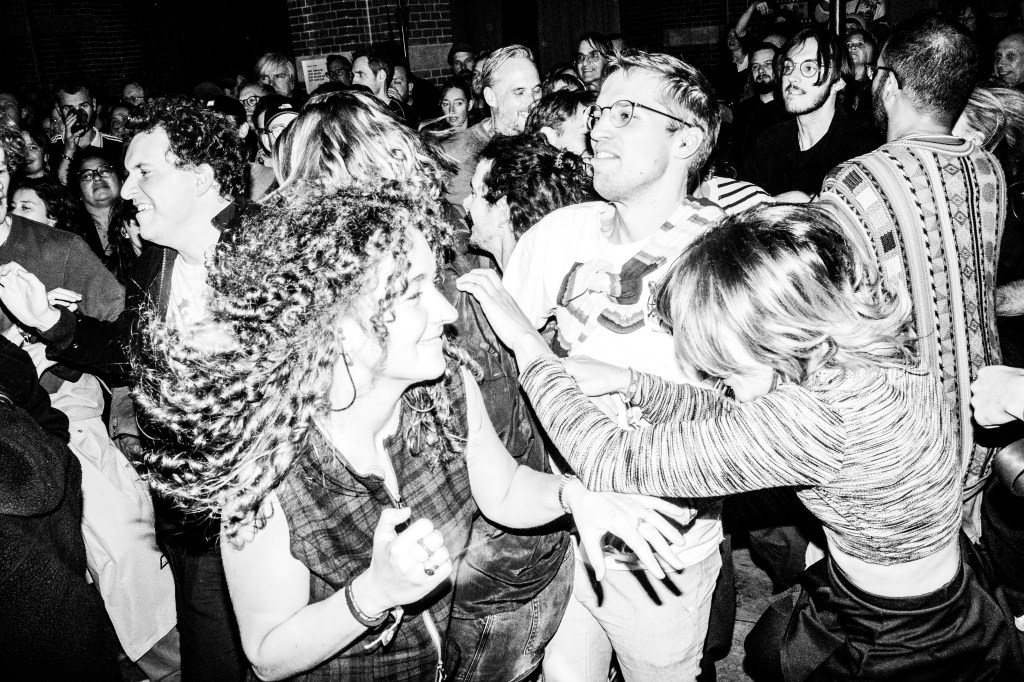
Soren: I don’t think it will ever be at risk of ending. Because that’s the thing with DIY, people will always keep going. Those types of people will always just keep making opportunities for themselves, finding new houses, finding new spots to play in, and making their own magazines. There’s always gonna be an influx. Especially when more young people come in. I don’t think it will ever truly die. I think strengthening it by cross-pollinating across different art intersections would be really helpful; if the scene could be a bit more cross-pollinated, I think that would be really cool.
Also, obviously, there are a lot of male bands, which is fine. And that’s, like, okay, because obviously people can’t control if they’re male. But I think being aware and creating a space that’s, like, more comfortable for people to come into… I mean, I grew up around hardcore and DIY punk stuff, so, like, for me, I feel less uncomfortable, like, being in those spaces. But like, someone who’s never been to a hardcore show won’t feel safe or comfortable. I think it would be helpful, especially as a man, to encourage that the audience is for everyone. I think that would be helpful.
If you could put on a DIY show absolutely anywhere, where would it be?
Soren: Well, our drummer’s from Evansville, Indiana. And he’s made, like, such a cool scene in Indiana. Last time we did a tour there, we played in a church basement. And it was like 100 kids. And we’d never been there before. He’s just such a good promoter, so that’s definitely where I would do it. It was just so fun. Like, it was the best show of the tour, in a place where you wouldn’t normally see a show. I was literally playing next to a vending machine in the kitchen. But yeah, I mean, anywhere, I’ll play a show anywhere.
Lastly, if you woke up one day to find all your bandmates magically transformed into different animals, what animals would each be and why?
Soren: Oh wow, Linus would be a penguin because he just really likes them. Actually, he reminds me of a dog, but I feel like that’s boring. Maybe he’d be a Pokémon of some kind, like a Snorlax. Darren would probably be like a bulldog, a pitbull, or a rottweiler, and Linus would be a Labrador. I would just be a rat, yeah, I just am, you know, they are self-sustaining, they know how to survive.