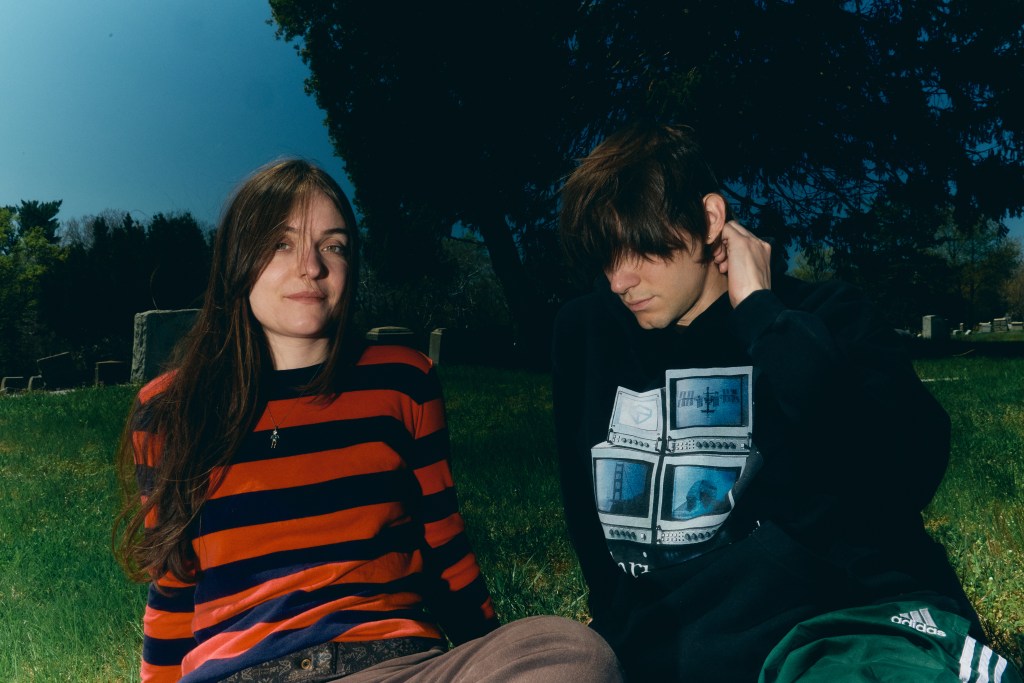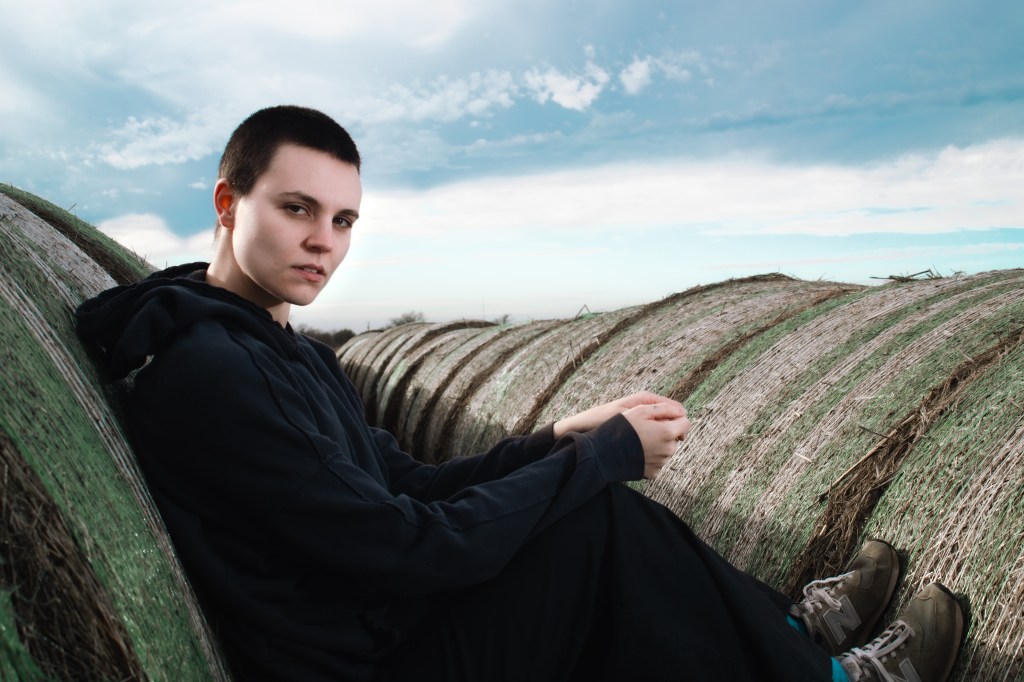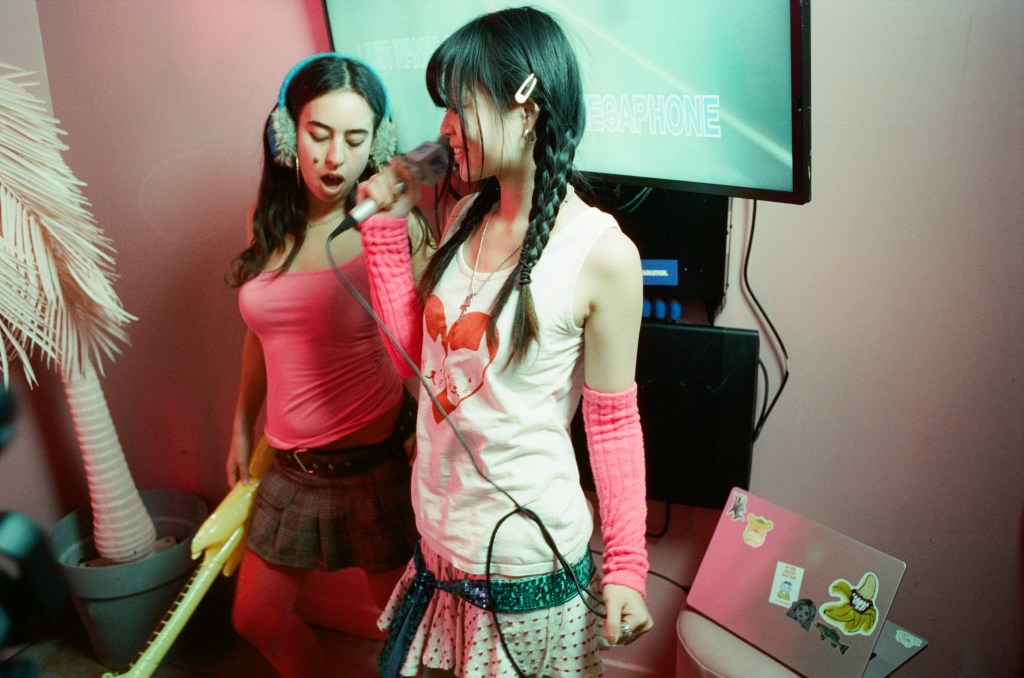
The Minneapolis band bring a night of tenderness and release to Denmark Street.
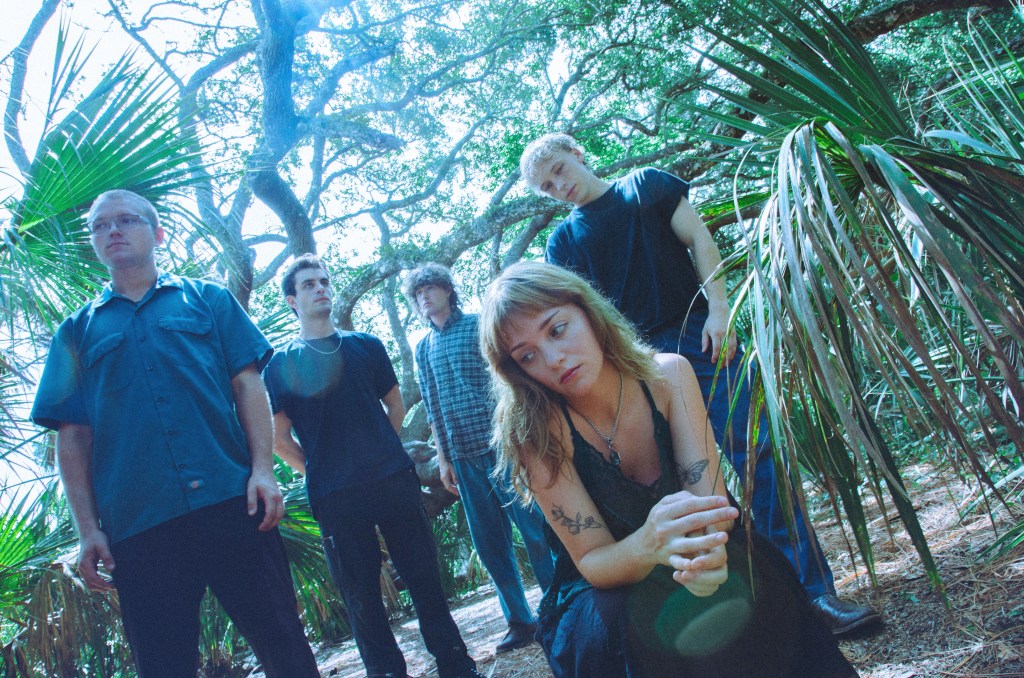
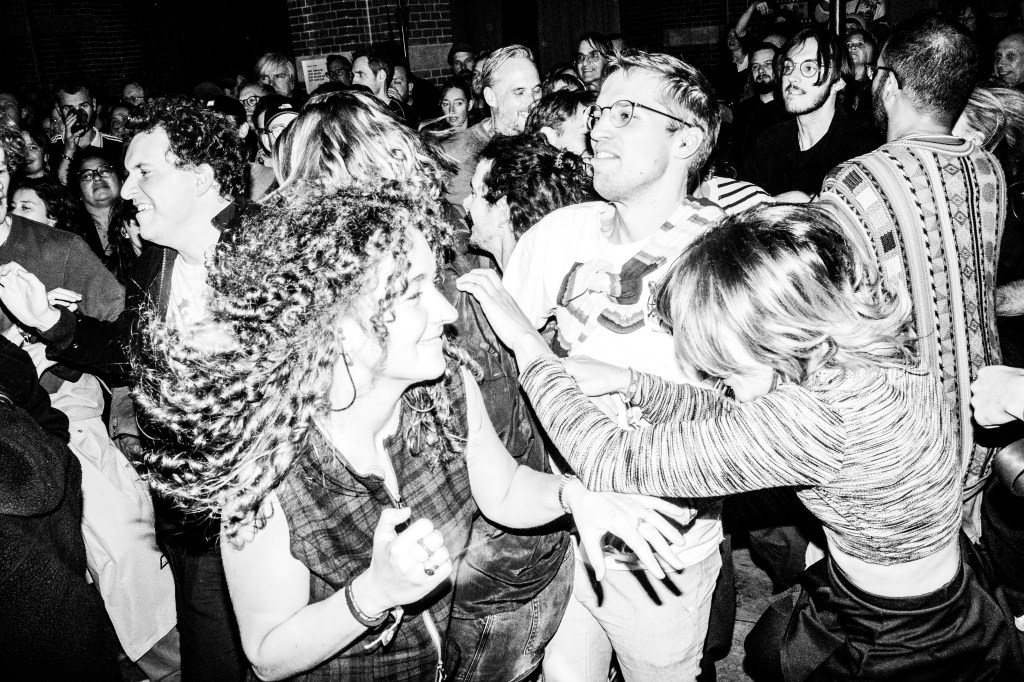
From strangers’ basements in Minnesota to a sold-out basement in London, she’s green have always seemed to belong underground. Last Friday, The Lower Third became another one of those places. There is no connection down there, nothing to pull you back into whatever is happening outside. You can disappear for a few hours and forget about everything else. Exposed pipes stretch across the ceiling above a crowd packed shoulder to shoulder, with barely enough space to move as the Minneapolis five-piece take the stage. For a moment, the rest of the city feels very far away; there is nowhere else to be.
she’s green have crafted a sound where intricate guitar lines and propulsive percussion steer the band between ethereal dream pop and the rougher edges of indie rock. The opening feedback of ‘locket’ reverberates through the basement, Zofia Smith’s soft humming barely rising above it. Then comes the first word: “Goodnight”. There is something almost cruelly intimate about opening a performance that way, signing off before the night has even begun. Taken from ‘swallowtail’, released this July, the song slowly pulls itself forward as Kevin Seebeck’s drums begin to drive beneath it.
Smith barely moves, but somehow the room keeps finding its way back to her. Her eyes meet people across the crowd and linger there, quiet and unflinching. There is no grand gesture, nothing to hide behind. She simply stands there and sings, and somehow that feels more exposing. The band are deeply inward in these moments, absorbed in their own world but never absent from the room around them. Everything feels close: the music, the bodies, the faces caught in the dark.
During ‘keeper’, Smith moves slowly across the stage, her gaze travelling through the crowd, catching on faces before moving on. Everything feels delicate. Liam Armstrong and Raines Lucas’ guitars weave around one another, shaping the melody through layers of texture that leave space for the softness of Smith’s voice. When she sings “I am picking apart what you meant to me”, the words land somewhere between tenderness and ache, the kind of line that feels different when you are already carrying something with you.
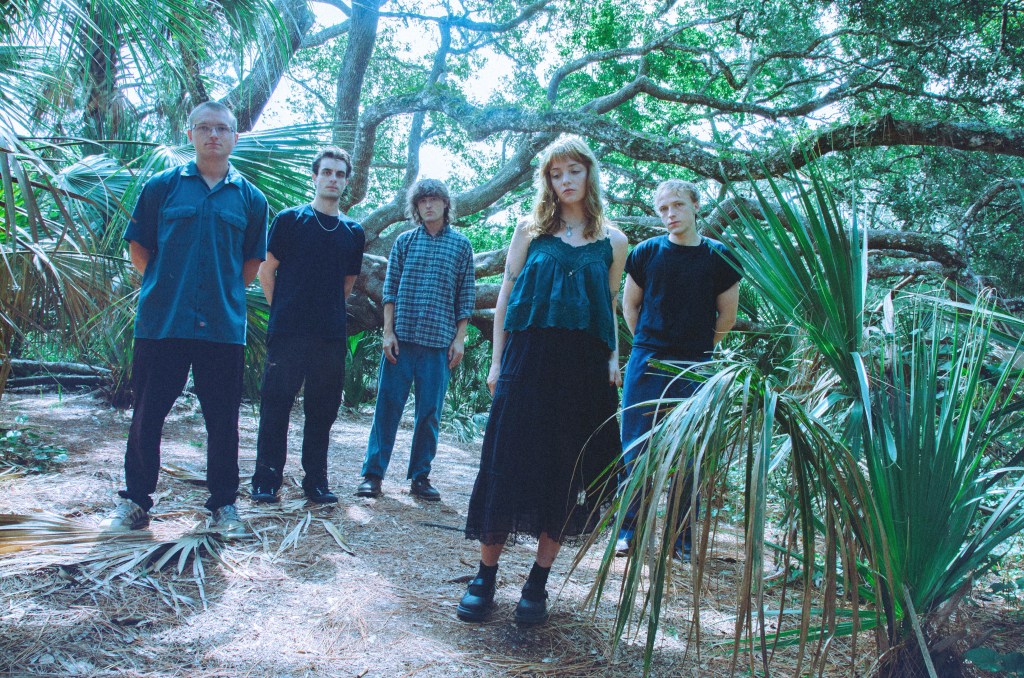
Teddy Nordvold’s bass reverberates through the room as ‘keeper’ slips into ‘purple’, the drums grounding everything beneath it. The instrumental bridge becomes a brief cathartic outburst before everything falls away, leaving only guitar suspended in the room. By the time the band play ‘river’, the first song they ever released, the sound has taken on a distinctly shoegaze quality, guitars blooming into one another as the five members spread across the long, shallow stage.
It could simply be the shape of the room that places them next to each other rather than in a staggered arrangement, but there is an intentional feel to the way each member is given space to be seen. No one disappears into the background. Instead, they look less like a band putting on a show and more like friends playing together, each person listening for where the others will go next. For a brief moment, Nordvold and Lucas turn towards one another as their strings intertwine. It lasts only a few seconds, but it is one of those small details that make the performance feel immediate.
On ‘paper thin’, the distance between the music and the body seems to disappear. Smith dances across the stage with delicate movements, while the drums pulse beneath her and the guitars reverberate through the room. Her voice climbs higher through the final chorus, stretching the song until it almost feels too much to hold with the line “holding onto something gone”. Tears come without much warning. Around the room, the reaction is just as visceral. There is only the song, the noise of it, and the strange relief of finally letting something hurt. There is a comfort in the presence of the room that feels difficult to explain without ruining it, the kind of energy that makes the throat tighten before the tears have even arrived, yet still you dance.
‘willow’ brings a burst of lightness. Seebeck’s drums become playful, Nordvold’s bass felt as much as heard, while Armstrong and Lucas trade intricate guitar lines around Smith as she takes the handheld microphone and starts to dance. There is something unguarded about it. The crowd moves with her. Then the light shifts. For a moment, the room seems to soften.
On ‘bleed’, gritty guitars scrape against the softness of Smith’s voice. She walks slowly across the stage, her movements almost eerie against the noise gathering behind her. The guitars hang in the air, rough around the edges, but never swallow the voice. The whole thing feels slightly unsettled, as though the song is searching for somewhere to land.
‘mettle’ is more physical. Bodies jump during the chorus as Seebeck’s drums push the song forward, Nordvold’s bass holding its weight underneath. Armstrong and Lucas’ guitars twist through one another, atmospheric one moment and jagged the next. There is so much happening at once, but nothing feels crowded. Layers drift and collide, melodies momentarily floating above the noise before being pulled back into something heavier. The sound is dense without becoming muddied, each texture finding its place before the guitars fold back into the rhythm.
By the time they reach ‘mandy’, the room feels quieter again. Smith speaks about checking in on people because you never know what someone might be carrying. It is a simple thought, but hearing it here makes it land differently. Sometimes someone asks how you are doing, and that is enough to make you cry. Her voice stays soft throughout the song, almost entrancing, its vulnerability never feeling forced.
There is something equally intimate in Smith asking for the house lights to come up so she can take a photograph of the crowd. The gratitude feels genuine. She looks out at the room for a moment, taking it in, and the lights flatten the distance between the stage and everyone standing below it.
‘close your eyes’ feels less like a final song than a place to disappear into. Seven minutes of reverberating guitars and pounding drums somehow become soothing, the noise settling over the room until Smith’s vocals land with the softness of a kiss on the forehead. It is a shoegaze lullaby, but one that never quite lets you sleep. The song could keep going for another seven minutes, and no one would complain. When it finally fades, the reverb hangs in the room long enough for the crowd to start chanting for one more song.
‘lakes’ lets that feeling linger, the room suspended somewhere between sound and silence before ‘syndulla’ pulls everything back towards earth. The guitars become sharper, screeching against Seebeck’s drums, Nordvold’s bass rumbling underneath as Smith’s voice turns rawer at the edges. There is still something dreamlike in it, but it feels thinner now, stretched against the knowledge that the night is ending. The five of them fill the room with noise until the final moments, and then, suddenly, there is nothing.
For a few hours, the outside world felt very far away. The basement became its own small place to exist in, full of bodies, noise and something difficult to name. Then the final note disappears, and the room is only a room again. The pipes are still overhead. The bodies are still pressed together. The city is waiting upstairs. What is left is the ache of having been somewhere so completely, of finding something real and beautiful in the noise and then having to watch it slip away. Like a dream dissolving on waking, she’s green lingers at the edge of consciousness, caught between shadow and light. Sometimes, the only way to hold onto something beautiful is to let it go.