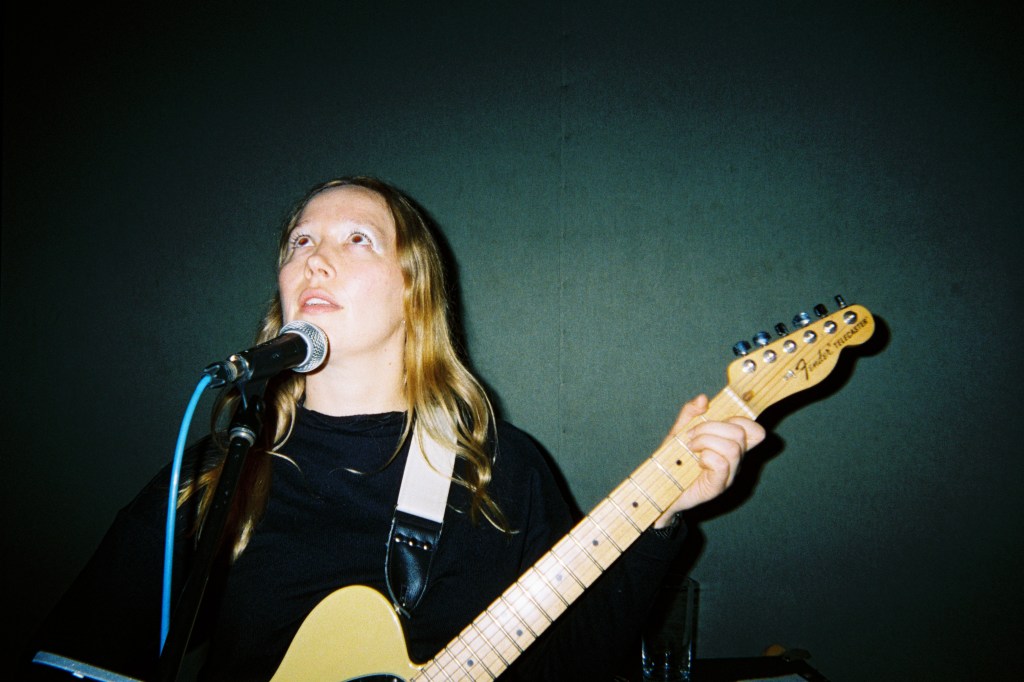
Full of animalism, desire and devotion, her debut is a reclamation of raw humanness played to the tune of her electric guitar.
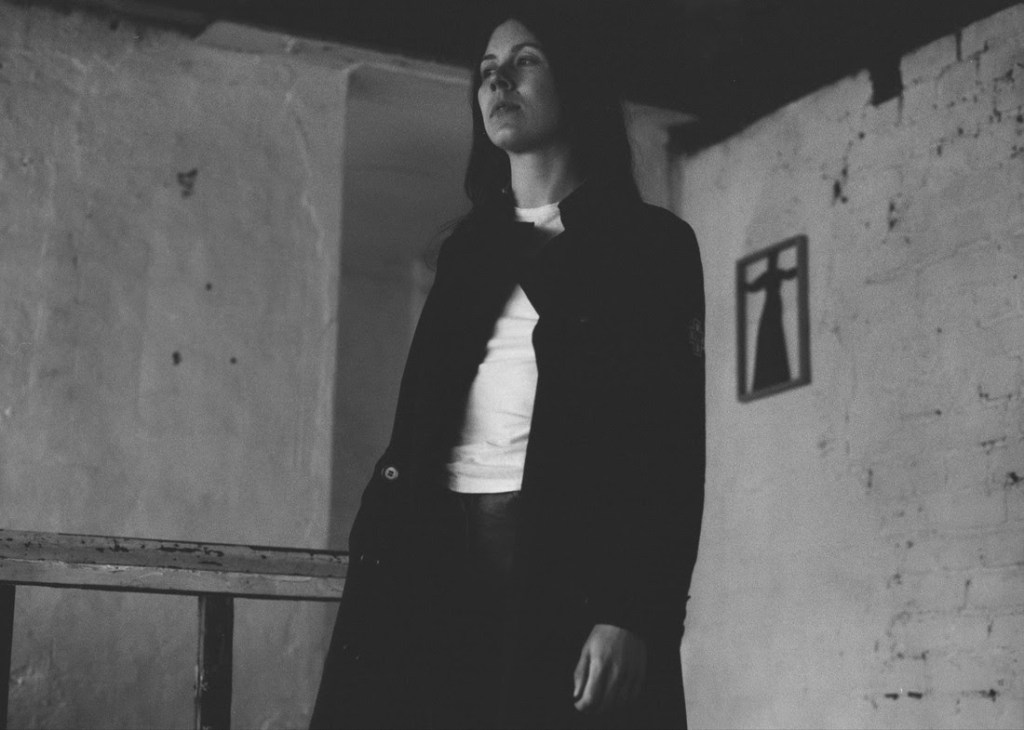
“And I feel so free // feel like running // got no hair // weighing me // cut so close // scalp is nicked” – Patti Smith, ‘Jeanne d’Arc’
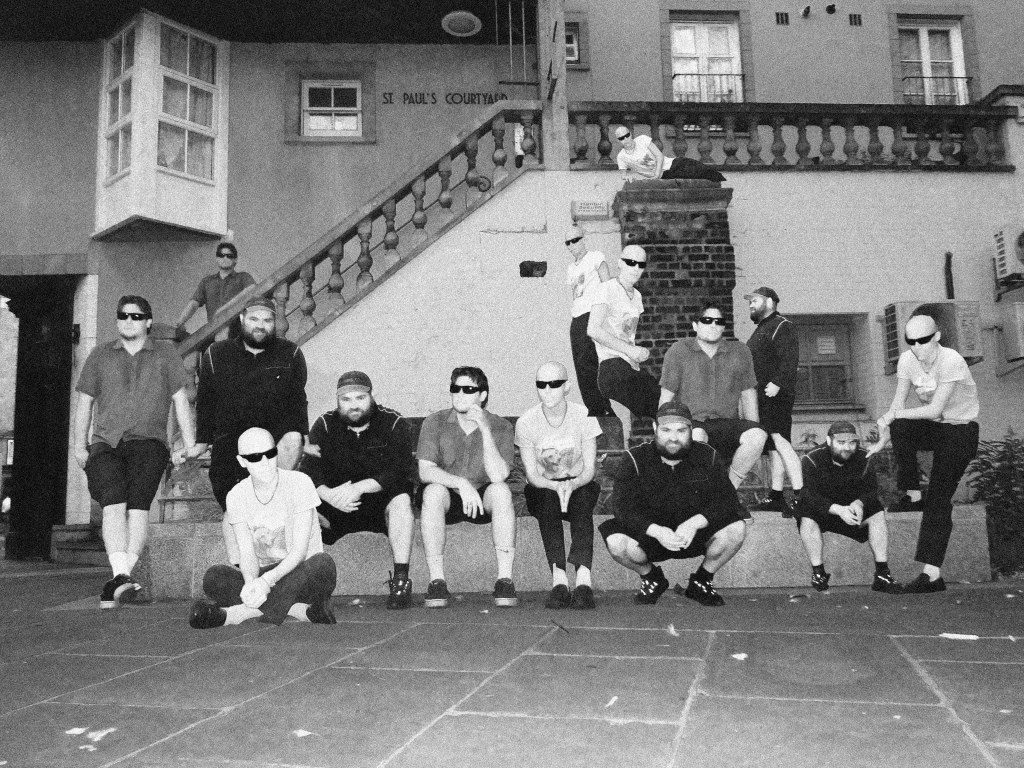
Burning with the same fervour as Patti Smith’s ode to Jeanne d’Arc, Nina Winder-Lind’s debut solo album ‘Wild Love’ is unflinching in its acceptance of emotionality. Unafraid to embrace humanness in its rawest form, Nina (also of Brighton four-piece The New Eves) conjures a spirit broken open, recklessly alive and deeply entwined with its past. ‘Wild Love’ is a dissected body pouring forth its soul, which bears all the fleshy realities that come with a life fully lived. Vital and revived, Nina’s first full-length collection of solo material runs as liberated as Smith’s Joan of Arc: emboldened, fearless and free.
Half recorded in a converted church in Bristol, ‘Wild Love’ carries with it a remarkable sense of devotion. Unlike the piety of religiosity, Nina’s devotion to human vivacity runs rampant – it attacks, it crumbles, and it remains self-assured. No more can this be felt than in the album’s opener ‘Street Hassle’ with its spoken-word directness and self-reclaimative lyricism. Dancing around phrases like “I’m no Madonna, no whore”, ‘Street Hassle’ sets the defiant tone for the album, unconcerned with religious ideation and the confines of expectancy. Nina’s impassioned vocals erupt from a rising flute melody and Toma Sapir’s marching drums before cascading into the anthemic conclusion, “I think I know now what to do.” Crashing, exploding melodies permeate ‘Wild Love’, most notably on single ‘This is Our Life’. Reflecting on the potentials of being, the track blends esoterism, spirituality, love, desire, and passion into a heartfelt moment of peace and pride. With the brightness of Nina’s vocals in the chorus’ refrain, “burn baby burn”, ‘This is Our Life’ speaks to an intimacy that can only be conjured from watching someone you love change and develop over many years. As the song reaches its conclusive climax, distorted guitar from Finlay Burrows and keys from Nina’s New Eves bandmate Ella Oona Russell merge into this hopeful instrumentation that radiates an unparalleled affection.
‘Wild Love’ is saturated with untrammelled animalism. Nina’s powerful vibrato and vocal force become an undeniable presence. In ‘You’re Not an Angel’, this intensity becomes evident. Reminiscent of David Bowie’s declarative cries in ‘Five Years’, Nina’s introductory spoken absolutes – “you are not divine”, “you are heavy and so am I” – feel at once virulently honest and self-assured. Uninterested in the temptation of angelism, Nina reiterates the beauty of being in and amongst somebody’s humanness. As her vocals rise in the chorus, pleading for “hips”, “sweat” and “lips” and the guitar builds endlessly, Nina seems to pour herself into her hunger and desire to be so deeply intertwined with another. Alternating between softness and hardness, both in the track’s lyricism and instrumentation, ‘You’re Not an Angel’ cements itself as the chorale of longing. This is not to say that all the love songs on the album escape heartache, for, as Nina states, these songs consider that “intense emotional entanglement with other beings”. Tracks like ‘Love You So’ and ‘Everything is About You’ feel both alive and equally despondent and mournful. The latter toys with the uncertainty that comes with feeling so deeply embroiled in someone else, summoning unanswered questions like, “If all your things are so colourful, why do you feel so sad?” With a melancholic cornet and harmonies from Nina and Ella Oona Russell, the song evokes a funerary tone that mourns a consuming, one-sided love.
Whilst these reconciliations with desire and love feature prominently across the album, ‘Wild Love’ is equally Nina’s reconciliation with selfhood and femininity. Charged with unbridled freedom, ‘Girls’ is a grimy, dirty track, unfettered from expectation. Filled with unmistakable truths – “girls feel guilt for their lust” – intoxicating appeals – “girls want to be in movies, girls want to live like monkeys” – Nina triumphantly asserts her girlhood. As much as the song is a liberatory acceptance of the power that comes with dismantling social frameworks of femininity, it also functions as Nina’s reclamation of the electric guitar. This recalibrated relationship with the electric guitar reaches its apex in the final track, ‘Foremothers’. Opening with sparse instrumentation and the raspiness of Nina’s vocals, the song has a timeless power. With the guitars bending notes and the words “I played electric guitar for you”, Nina desperately calls to those who built the life she leads. Full of demise, hope, aching and choral harmonies, ‘Foremothers’ grapples with the loss of childhood, the pain of adulthood and the longing to make proud the women who stood before you and the women who succeed you. An exhaustive conclusion to the album, the song serves as Nina’s eternal oath to remember her foremothers, and to always carry their fervency in her heart.
As the triumphs of Joan of Arc inspired Patti Smith’s own reinterpretation of her legend, Nina Winder-Lind fashions a familiarity of female family members, devotion, platonic love and impassioned dreaming. ‘Wild Love’ is dense with these ancestral branches; branches that have blossomed, branches that have snapped, branches aeons old. Revelling in complicated emotions, burning desires, unfixable heartache and reclaimative, spiritual power, Nina Winder-Lind stands tall as both Smith’s zealous Jeanne d’Arc and the writer who conjured her into being.