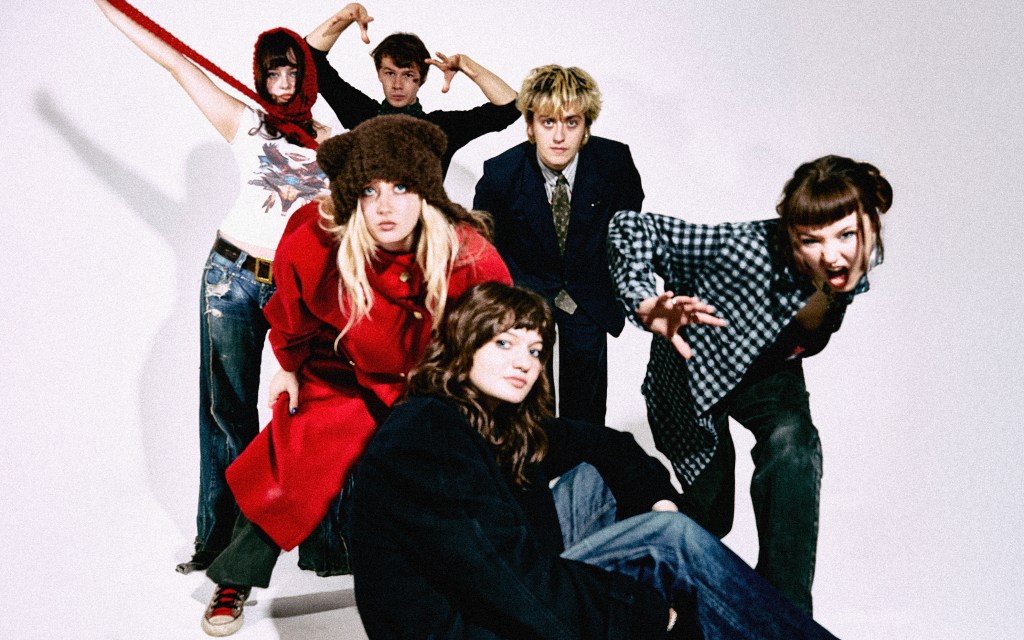
As they prepare to release ‘their debut album ‘CANNONBALL’, Man/Woman/Chainsaw share the lessons learnt from 200 live shows and years of friendship.
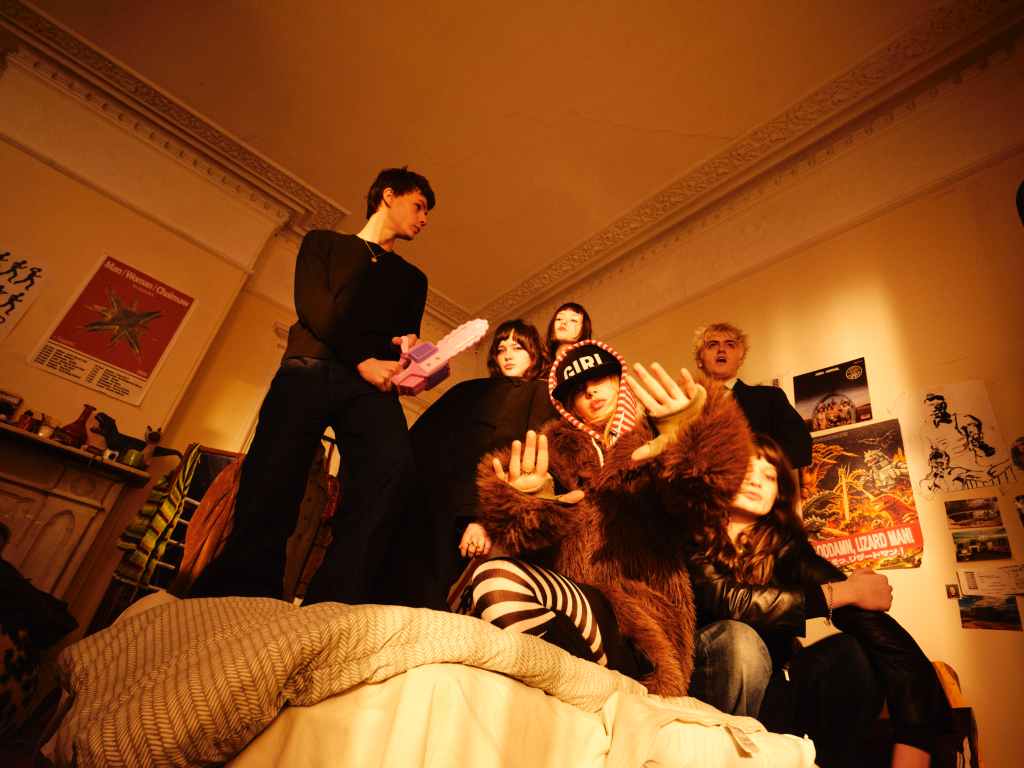
‘Do you want to go out with me? Circle yes or no’. Like a note passed from one shy teenage desk to the next, that’s basically how Man/Woman/Chainsaw began. A lot of groups will claim to have grown up with each other, but this London troupe actually have, meeting when they were only 14 in school.
“Vera had crazy eyeliner,” Billy Ward recalled of his first ever impression of co-vocalist and bass player Vera Leppänen. Another memory pops up, “I also remember a very early impression of you, Vera, is you singing ‘Wild World’ by Cat Stevens. It was like a kind of open mic school show, and I was like, ‘Oh my god, that was amazing!’”
The seed was planted there as Ward said, “I remember I was like, ‘yeah, I’m gonna get in a band with her.’”
There is something so sweet and special about a start like this. “I think it was basically like, ‘We’re going to a practice room. Do you want to come?’ to Vera one lunchtime, and got in a room and we played like ‘Teenage Kicks’ by the Undertones and some Nirvana songs, and it was probably shocking,” Ward remembers as Man/Woman/Chainsaw, in its earliest inception, was nothing but a bunch of teenagers on break, messing about.
But everything from then serves as a reminder that often the best way to learn is simply doing it. That was the ethos of the band’s move to gig as much as possible, becoming a staple of the London music scene about as soon as they could all legal enter its local venues.
“I don’t think you’re going to get good without practicing,” Leppänen said, but they never wanted this practice to be isolated. “Being in front of an audience is so different to being in a room,” pianist Emmie-Mae Avery added, with Leppänen finishing her sentence with the thought, “performance is a skill too.”
Man/Woman/Chainsaw emerged in a world obsessed with perfection and nonchalance where effort is often winced at. But as a band, they simply couldn’t be bothered with that attitude. The temptation might be there to hide away in a practice room until everything feels neat and ‘ready’, but that would be boring.
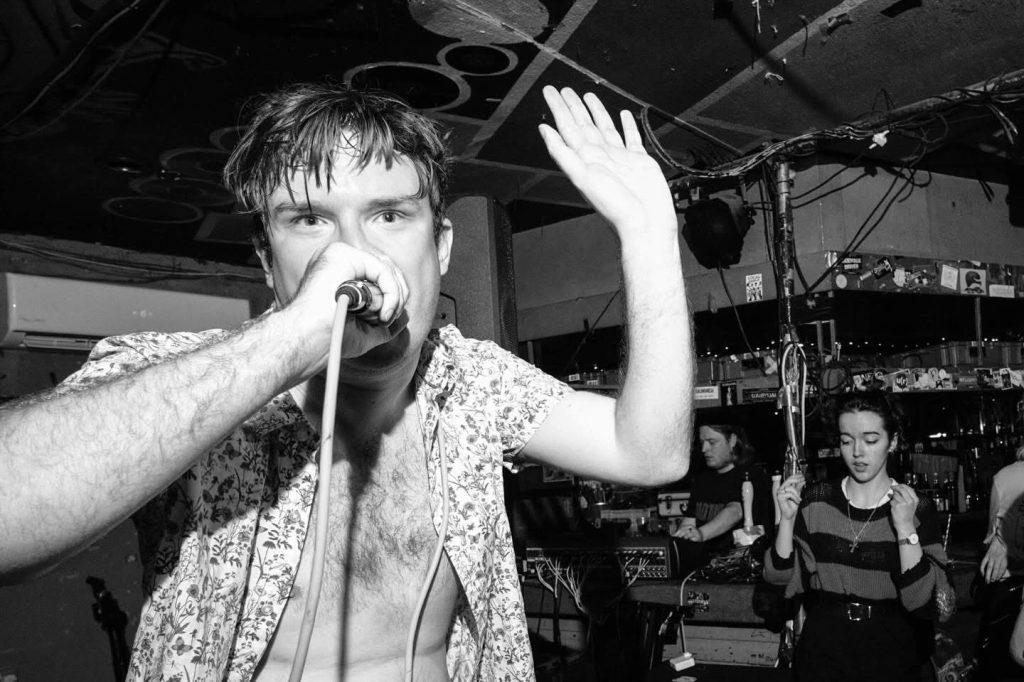
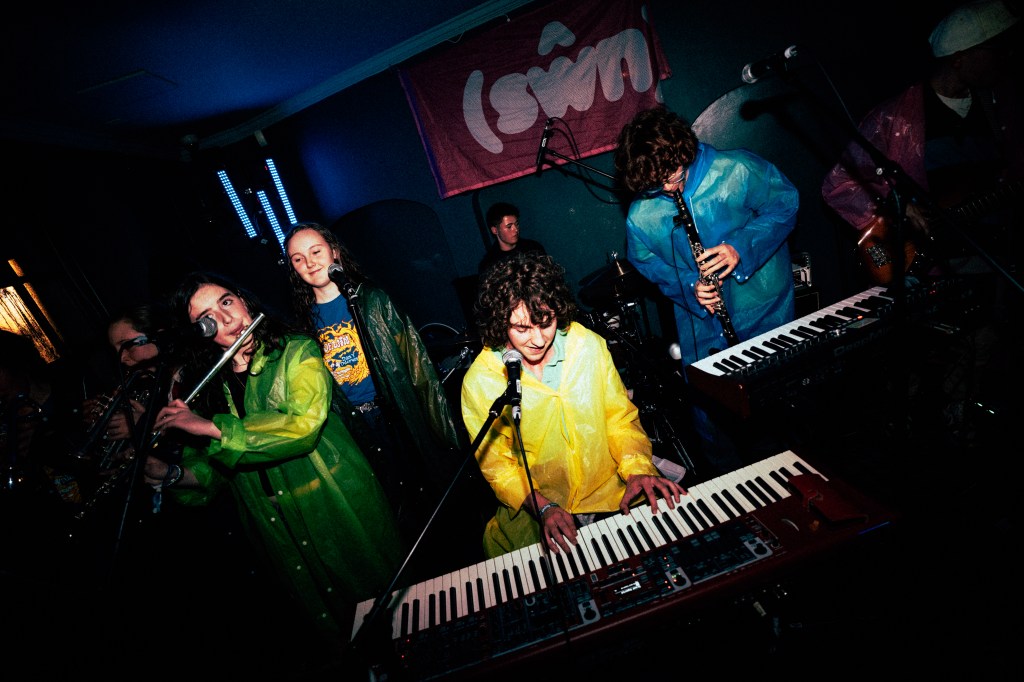
“It was just fun,” Leppänen puts it, plainly. “It was kind of a bit of novelty to taking your instruments with you and going to the pub”. For Ward, there was early fun and excitement in essentially playing the manager. “We had so much fun doing shows that like, because in the early days I did the kind of like emails slash Instagram DMs slash desperate texting, and I remember I became a bit of a maniac in terms of putting out so many feelers about doing gigs that we ended up doing really a lot.” That got the ball rolling and now, after becoming one of London’s most prolific live acts. Ward smiled proudly during our conversation, announcing, “We hit 200 shows this weekend.”
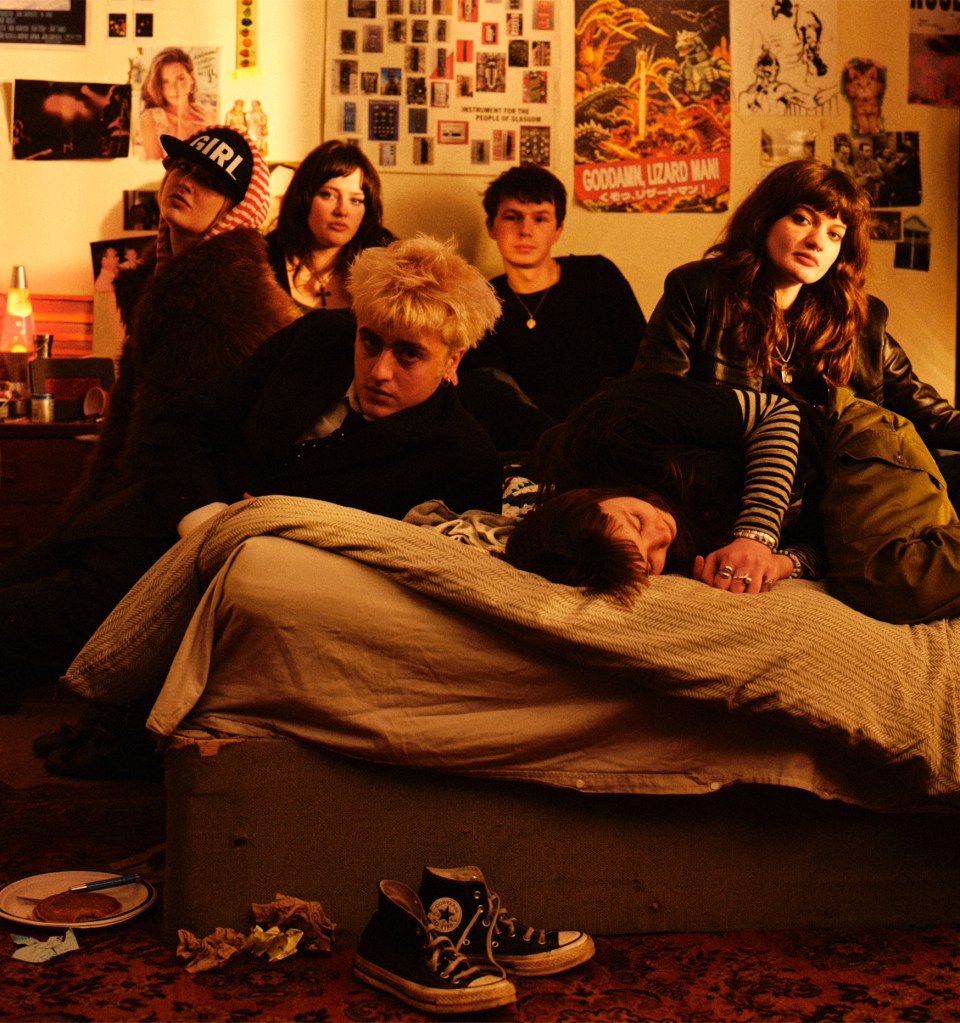
Another benefit from playing so many live shows is that you get to see so many live shows. Joining an ever–powerful cast of bands in the capital, they not only improved themselves, but witnessed the whole class improve, finding inspiration and motivation in that.
A core memory for Leppännen is Ward taking her to see Almost Shameless (aka Shame) playing a secret show at the Windmill. “We would have been, I don’t know, 16? 17?”, she recalls, “and I remember finding Charlie Steen super charismatic – being like, ‘Wow, what a way to command a room!’” Going back to the idea of performance being a skill too, and an essential one that needs to be learnt just as well as playing or writing, these moments on the circuit were lessons.
“Being in London was amazing,” Ward said as they graduated out of their school practice room into the pubs, adding, “It can be a lofty expectation to like feel like you’re doing well. But then if there are bands who are doing pretty well, who are on their first or second album and doing well on those, it’s motivating that they came out of the world you came out of the world you’re in.”
Man/Woman/Chainsaw don’t subscribe to the idea of the ‘South London Sound’, but the scene still inspired them. As Ward said, “It’s a bit less of a sonic thing and more like ‘We could do this if we just really try and make stuff that we believe in and think is good.’ Like it showed us there are bands who can go somewhere from here.”
But by now, Man/Woman/Chainsaw are far more than a band you’d catch at The Windmill or wherever else. Though they cut their teeth as a live band, their incoming debut album, ‘Cannonball’, shows they’re now so, so much more than that. Taking their six-person wide, multi–instrumentalist line up, and taking all the years of improvement they’ve put into their writing and playing since their teens, the record takes shape as a dynamic piece. As different singers take the mic and different styles and genres float in and out, it is excitingly expansive and never easy to pin down or define.
Ultimately, the challenge in making the record became holding some of that back. With so many ideas, and simply so many band members, they had to learn that you can’t quite go as insane in the studio as you can on the stage. “That was one of the big challenges of making the record, and that wasn’t really a thing we thought about before,” Ward said. “I think you could tell listening to the [2024 ‘Eazy Peazy’] EP and then to this, that how we write really changed because we realised once you get in the studio, some stuff that works live won’t fly.” Instead, the finest moments on ‘Cannonball’ are shaped by learning the lesson of being sparing sometimes and considered always.
“I think because we wrote a lot more for the sake of the album, we wanted to put in some more like dynamic changes,” Avery said, “We could look at the songs we had and think about the gaps, or where we wanted things to be wider, softer, louder, heavier, like all that kind of thing.”
For Leppänen, thinking about the album was stepping into a whole different way of thinking about the music. While the live shows are all about the collective of the audience, the nature of recorded music is completely different. “I think the way that people consume music now is probably quite different to what it has been historically. Listening to music now feels more like intimate and kind of private, you know, because people listen on headphones,” she said, with the idea of someone listening to the album in their earbuds on a walk being a key thing held in mind.
Listening to the record, all of it works. Their live energy is intact, but it also offers exactly those more intimate tracks that you want to take with you out into the world for an emotional inner moment. But what’s so exciting about Man/Woman/Chainsaw’s ability to do it all and do it all well is exactly the fact that they’ve worked for this, building over time through excitement and practice. That’s the type of foundation that will only get better and better. So for a final question, I pose to them the idea of what they want their legacy to be…
“First band on the moon.”