
Members of the community tell us about how artists are redefining Manchester music for today.
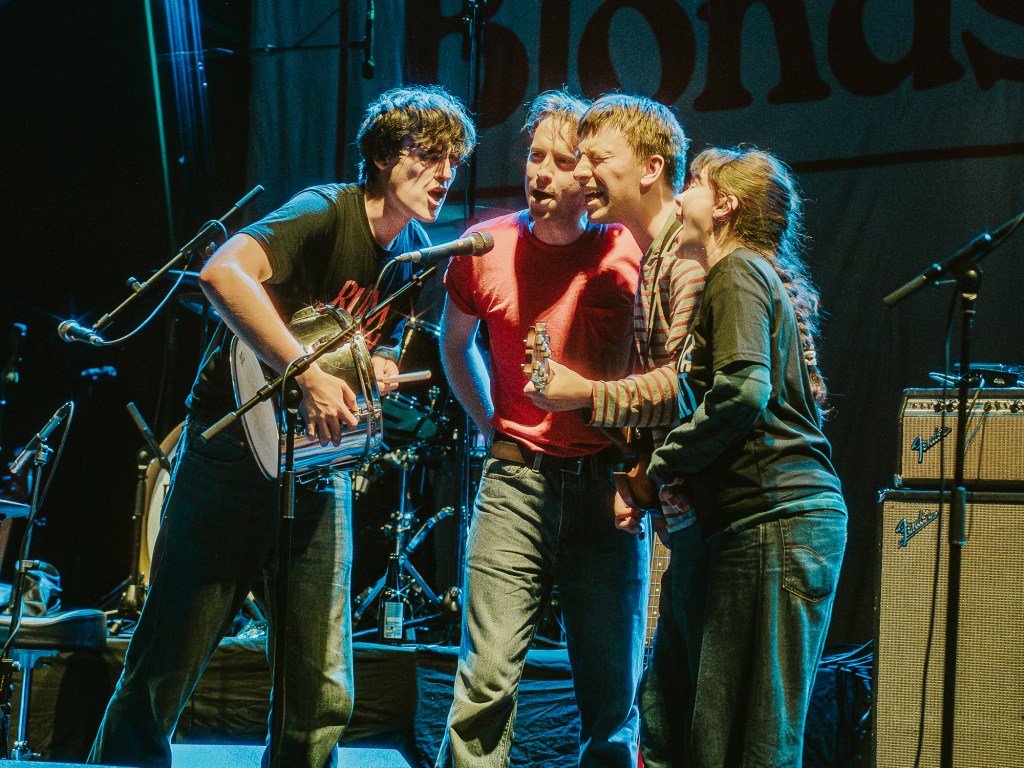
“I wouldn’t want to be anywhere else at the moment. I’ve lived in Manchester for years and I’ve never seen it so healthy and prosperous. It feels like the door has been opened; people are looking at Manchester bands now.”
Harvey O’Toole plays guitar in garage rock outfit pyncher and fronts Wyatt, who are best described as a much angrier take on Wilco’s alt-country. A couple of weeks after the latter’s set for No Band is an Island at Gullivers, we’re sat in the back of another Manchester institution, Britons Protection. “The stuff that ‘No Band’ are doing is really special, it’s become a vehicle for lots of bands to speak out. There’s a real sense of responsibility amongst the bands to be vocal with everything that’s happening. They’ve become a focal point for that.”
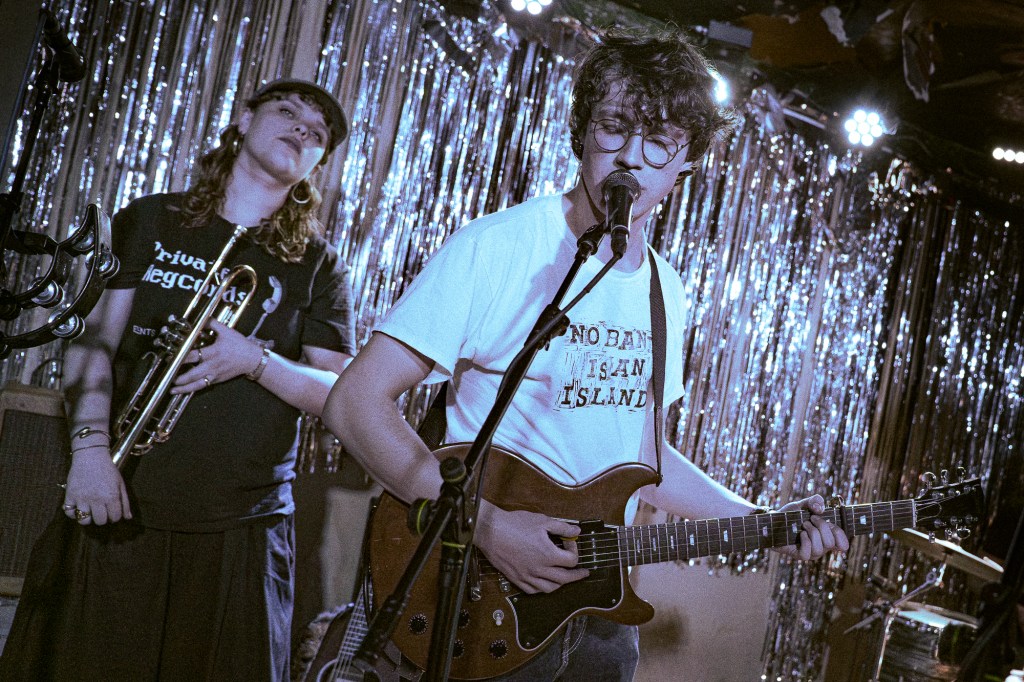
Originally comprised of members of Westside Cowboy, Holly Head, Martial Arts and Exeter’s Push Bike but ever-evolving, No Band is an Island put on regular fundraiser shows and work with direct action groups like Youth Demand to use the strength of Manchester’s music scene to effect social justice. First taking place in February last year, the events have quickly established themselves as a key component of the city’s musical ecosystem: bands usually begin playing shows in south Manchester and gradually gravitate towards city centre venues like The Castle, Gullivers and Rat & Pigeon. If a band’s invited to play one of those early city centre shows through No Band is an Island, they’re probably worth keeping a close eye on. Their nights regularly sell out before any part of the line-up has been announced.
“The more I started finding out about the music industry and politics and how they interact… it was pretty dire,” one member of the collective told me. “I was like, ‘Oh god, do I want to go further into this world?’ But there were so many lovely bands in Manchester who we never got billed together. I wanted to do that and celebrate the good bits of music. There’s so many politically engaged people and we wanted a platform and a context to express those things alongside great bands.” Typically, the nights will consist of a bill of local acts and those from further afield, with a speaker from an activist group addressing the room before the headliner.
“We want to encourage people that any form of action, big or small, will always beat passivity and resignation. There is always something we can do,” another member said.
Those nights feel like the hub of something really special that’s happening in the city. Not only is the music scene in itself thriving, but there’s a real vision being presented of what can happen when that collective strength is harnessed to reinvest in the community. With previous crops of bands, there was a single-mindedness. That’s been completely removed. Try to talk to members of Westside Cowboy about any one of their remarkable achievements over the last year and they’ll blush. Ask them about their other favourite bands at the moment and they’ll chew your ear off in the smoking area.
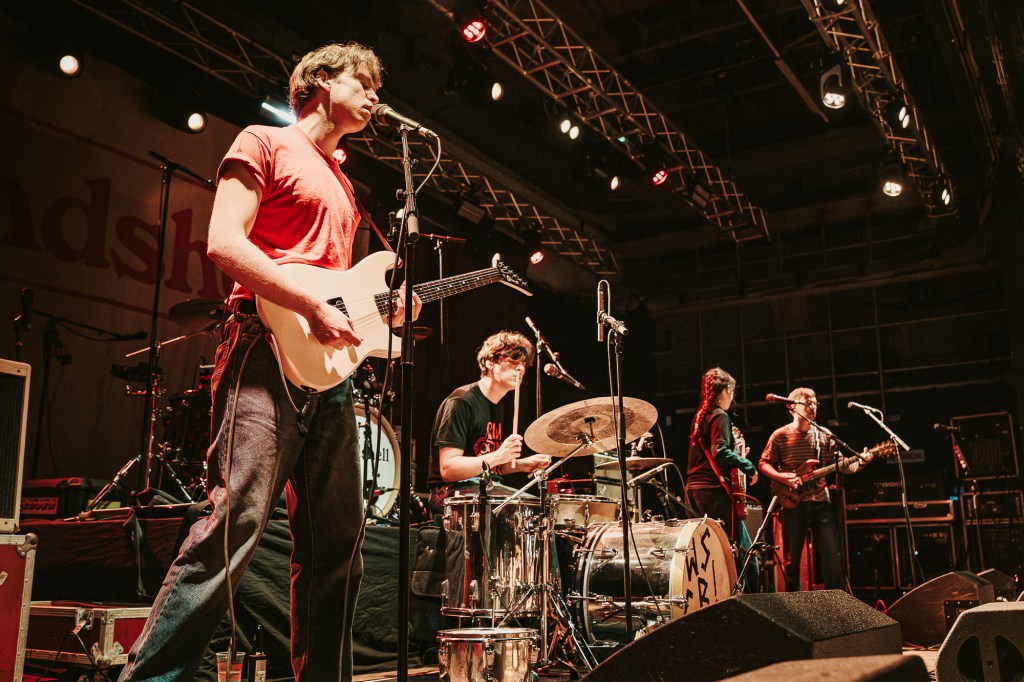
Westside Cowboy’s Paddy Murphy: “This expectation that Manc music has to sound a certain way and to be somewhat referential to its past has sort of melted away — everyone is just making what they want now. What’s awesome is that no two bands sound the same. Shaking Hand are the world’s first “post-slacker” band and are unbelievable. Holly Head fuse emo with baggy and funk. Martial Arts’ guitars sound like a train ripping through your living room. Formal Sppeedwear are some ‘70s disco experiment gone wrong in the best possible way. That’s without mentioning Tigers and Flies, TTSSFU, Wyatt, Open Fly and Dove Ellis… he’s moved to London now, the traitor, but we’ll still claim him. After all, Joy Division were from Macclesfield!” Paddy has to cut himself off, admitting that he could go on indefinitely and there’s no part of me that doubts him. The Windmill-indebted Magnum Opus II and post-rock group The Great Unwashed are both just one single in and are well worth getting in on early. There’s a really strong crop of folk bands spearheaded by Brown Wimpenny and some really interesting electronic stuff at the other end of the spectrum, with SILVERWINGKILLER perhaps the pick of the bunch. cruush have been around a little longer than some of the bands mentioned but have taken a big step forward with their new stuff; ‘Rupert Giles’ is one of the best songs that you might’ve missed from last year. Mleko’s swirling blend of jazz, folk and post-punk has been dubbed “gub rock” by the band. Whatever you want to call it, they’re brilliant.
Of course, waves of great bands don’t happen by accident. Bruno Evans, who plays in Mleko and cruush, has noticed an improvement in the landscape of the scene in the time that he has lived in the city. “I think in terms of accessibility and the quality of the bands there’s been a big change. You’ve got the New Cult nights that Zac Chidgey is running, the Hot Take stuff at YES, No Band and other new music nights and they all feel quite welcoming. I found it quite daunting when I first moved up and we used to joke around and call YES ‘the impenetrable fortress’ but it’s not the case anymore. It feels like everyone’s trying to lift each other up now and there’s so much good new music and so many good people making and supporting it.”
That’s a sentiment that Paddy echoes. “There are so many opportunities for bands to get their start here. Without the infrastructure, the band scene would be nowhere near as vibrant as it is today. Cowboys played our first gig at a coffee shop, our second at Fuel and our third at The Castle. All of those gigs were given to us by friends in the scene that knew of us and were up for giving a stupid new band a go, even if we only had four songs. We feel so lucky to have come from and to continue to be part of this community.” There’s a real blend of support and healthy competition that has aided the scene in a big way. “You’ll watch a band do something amazing and you’ll then have this fire in you to try and make something that made you feel the way that your mate’s band just made you feel,” he adds.
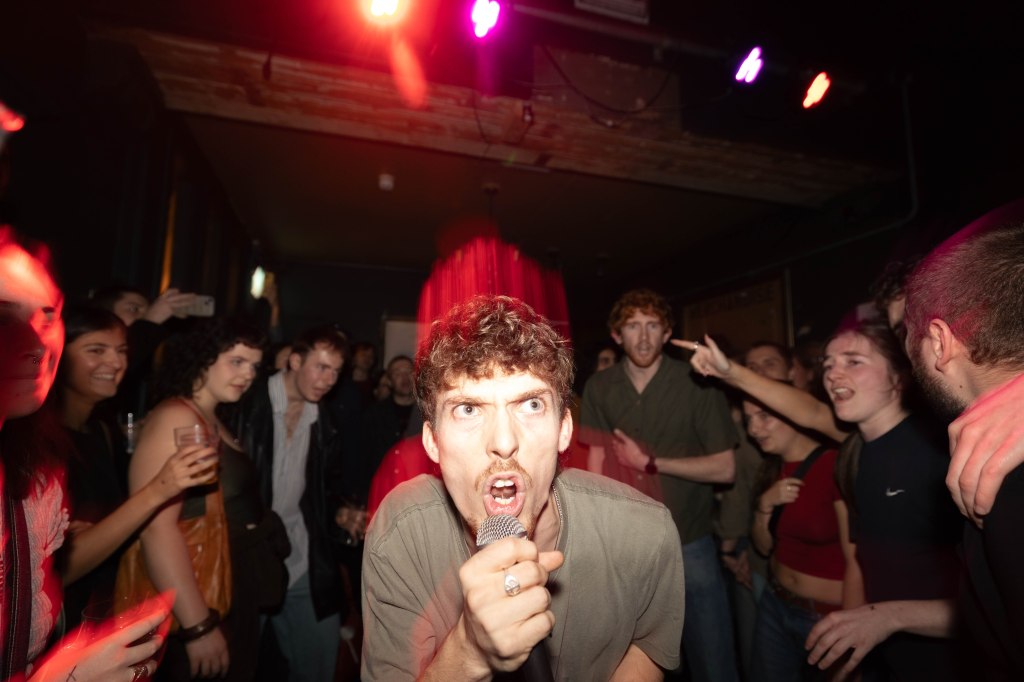
The point about venues is a salient one. After the devastating closures of Sound Control and Ruby Lounge towards the back end of the 2010s, people are rightfully precious about preserving the city’s remaining cultural infrastructure. That solidarity was on show when Cafe Blah and Withington Public Hall faced closure a couple of years ago. “Those spaces had been so welcoming and so helpful when we’d done a Gaza fundraiser before, so we kind of applied the format we’d used for those nights to put on nights to raise money for the venues themselves,” explains Bruno. “The line ups were incredible but everybody kept everything as cheap as possible to raise as much money as we could for the venues.”
The evolution of that infrastructure has been aided by those venues being kept open and by the openings of Rat and Pigeon in 2024 and Kamera a year later, but it also feels as though the relationship between bands and the venues that they play has changed. More care seems to go into choosing venues. Acts like TTSSFU, Chloe Slater and Brown Wimpenny pulled out of Manchester International Festival over the summer due to AVIVA Studios’ ties to UK drone factory UAV Engines, a subsidiary of Elbit Systems. James Brown, who plays in Brown Wimpenny, explains: “It was about impact. We thought about going on stage to make some kind of statement and then we were like, ‘Actually, there’s capacity here to make more of a noise by not because it would impact the festival more’. It wasn’t a trivial decision. It was something we really deliberated over and strategised about.”
“We saw that TTSSFU had pulled out first, I think. We started to get the sense that there was capacity here for a mass boycott, which is an effective boycott” says the band’s Ella Evans. Out of those boycotts came a plethora of hastily arranged replacement shows, including a Brown Wimpenny show at Hulme Garden Centre on the day that the band would have been playing at MIF. “That was the right decision. That restated that music is made by us – by the community and for the community” adds Chris Bright. “That’s what’s really good when we’re talking about this political and music community idea. That got the political people to have a good time and the folk heads who are into us to think about the Palestine movement a bit more.”
“Generally, I think we should be thinking a bit more about where we choose to play,” Chris continues. “We played The Windrush Centre as part of The World Transformed. Without that festival you’d never get a folk band trying to hire that space and there is a real shortage of those sorts of spaces. We know what the standard venues are in Manchester but I think we should ask ourselves, ‘Can we do something with this other space? Can we bring people to venues that are needed by more than just musicians and fans of live music?’”
Whilst it’s partly down to artists making a concerted effort to support spaces, another reason for that widened pool of venues stems from how catastrophically the hospitality industry in the city is struggling. The economy in Manchester at present demands that everywhere in the city is open for as long as possible, to take as much money as possible to even have a chance of staying open. Cafes don’t really close anymore, they become wine bars in the afternoon and late night dining spots or nightclubs later on. Having a space for live music has become a must just as a string to a bow for venues that are fighting desperately to compete in a hellish landscape. It’s a sad state of affairs, but inevitably the availability of more spaces to play in, especially ad hoc ones with smaller crowds, has led to there being more opportunities for bands to cut their teeth. The idea of more casual music venues in which bands feel able to make mistakes and experiment is something that David Byrne references throughout ‘How Music Works’ and seems to be pertinent here.
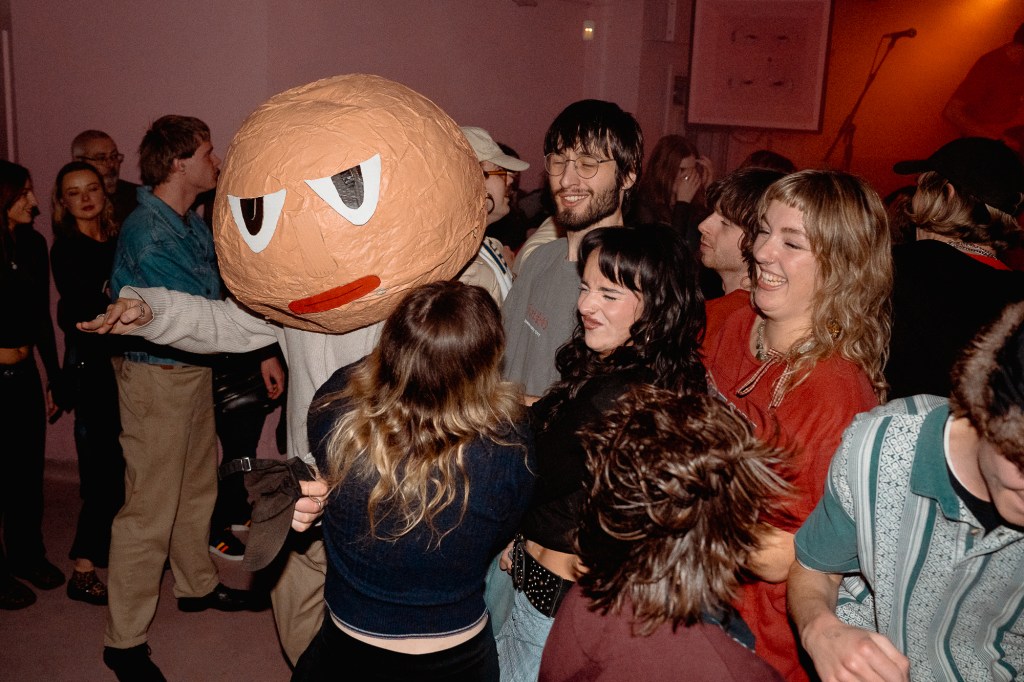
As well as the improved health of the city’s infrastructure and the more cohesive culture of its artists, another thing that kept coming up in these conversations was the impact that the lockdown six years ago has had. “I do think it has a lot to do with COVID. I think people had time to stew on projects for longer, I know that some of our stuff was initially being worked on in lockdown. I think that isolation bred some creativity” says Shaking Hand’s Ellis Hodgkiss. It makes sense that this vibrant political music community would flourish in the aftermath of one of the most politicising events of the century, when the incompetence of the government was felt more intimately than in any other time in living memory.
Manchester has struggled to muster up the courage to imagine what else it could be since the end of the 1990s, laying culturally dormant for the best part of thirty years before exploding in a wave of nostalgia when Oasis reformed last year. There have, of course, been artists that have subverted this trend but it has never amounted to a genuine cultural shift. That shift is happening now. The pull of the capital, of course, is still strong. There were a couple of artists who made the move before I’d gotten a chance to speak to them for this piece. But Manchester is finally beginning to reimagine what its music scene can look like: not a bad imitation of its past nor a stepping stone to somewhere else. It’s really cool that the city is called home by some of the most exciting new bands in the country. What’s more significant, though, is that those bands are thriving because they’ve helped to build a community that supports experimentation, collaboration and solidarity. The waves of bands that have come before have lacked this kind of mutual grassroots support, but today there’s every reason to believe this infrastructure will be there for the next crop of bands to come through. The ladder has never been so decidedly let down.

 Hard Of Hearing Magazine