
The South London artist on his approach to writing and releasing his latest album, out this week via Divine Schism.
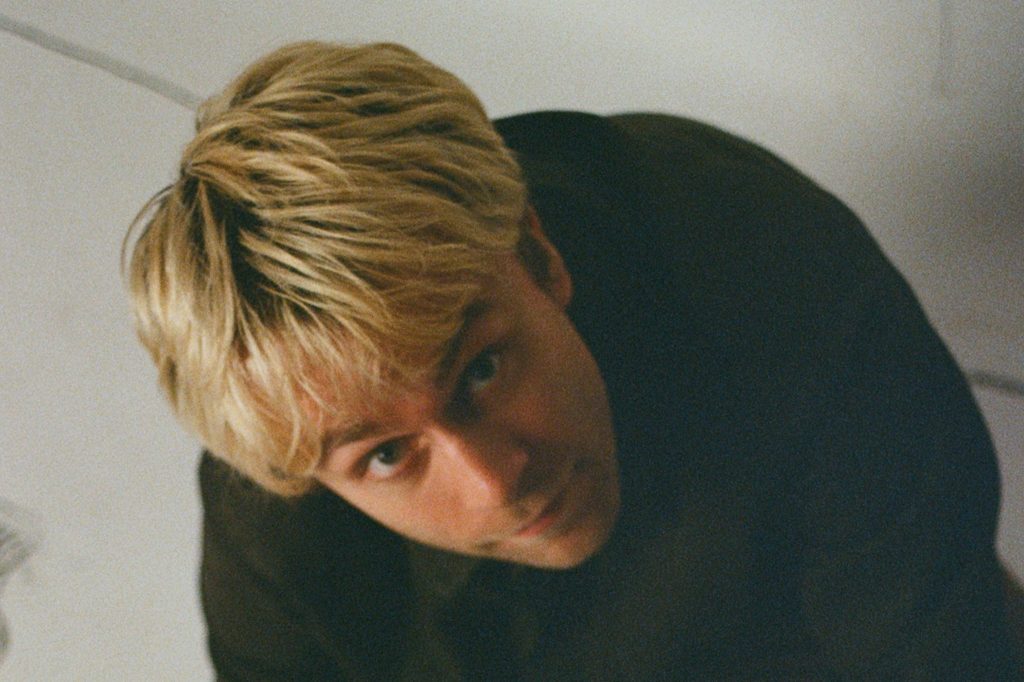
South London artist Lou Terry’s new album ‘Animal, Vegetable, Mineral, Spectacle’ releases this Tuesday via Divine Schism. In recent years, Terry has made a name for himself as one of London’s most eloquent songwriters, his writing powerfully responding to the present moment in personal and political contexts. As this latest record reminds us, his songs also unfailingly revolve around big riffs and memorable melodic hooks, which guide the more unexpected and experimental elements of his musical arrangements. The sound of recent collections ‘Warmly, Alexandria’ (2023) and ‘Building A Case’ (2024) is focused into a more immediate – but nevertheless unpredictably diverse – chronicle of a moment. Reflecting on the album and his approach to writing, releasing and touring as an independent artist, Lou talks us through the making of his ‘Animal, Vegetable, Mineral, Spectacle’.
Was there anything you particularly wanted to do differently with ‘Animal, Vegetable, Mineral, Spectacle’ compared to your previous records?
Self-producing and mixing it is what springs to mind. I’ve been sharing a studio in Cable Street for a couple of years now and it felt like a place where I could make everything from scratch but also finish things from. It’s changed the whole process of making the record, because I’ve had the opportunity to be more hands on with all parts of the process, chipping away at the songs as if they were little carvings or collages. There’s always a live element at the centre of the song that kicks the process off, maybe a guitar and drum part played together, but then that recording becomes more like a static art object you can start to play with, like a painting or a sculpture. And like those art-forms, I’m often trying to capture something that was once alive and moving, but am also trying to say more about that moment than the moment itself could have given. So you end up going into the initial recording, and honing in on the bits that interest you, and build the arrangements around that, chopping the song up and regurgitating it through tape loops, re-re-recording parts in different spaces through speakers, amplifying new material that arises from those processes, and so on.
Was there any unifying theme that defined what songs went onto this album? Or is it more of a chronicle of a particular moment?
I never consciously think about overarching themes, though the one that’s emerged has probably been dealing with the self in the times we’re in, and often failing to be the self you envisage or wish to be. We obviously exist in such unusual and horrific times, and the process of making music seems constantly in question for me: What does it mean to be spending time making music when there are so many pressing issues around us? The songs are reflecting this feeling back out onto whatever’s happening around me in life, I guess trying to understand what the relationships around my personal universe mean, and how I’m relating to the world. I think childhood comes up a lot in this record, losing and letting go of parts of yourself as you grow up and change, and also death, which has definitely been influenced by the death of my friend Jimmy – who features in a number of songs on this record as well as previous ones.
What did the writing process for this album look like? And more generally, do you tend to work by routine or does it come in flashes of inspiration?
I’m always trying to get into routines but they never last long. I find setting myself a routine is helpful if I’m feeling down and don’t feel like making stuff. It gets me going and I try and do so many hours of writing or practice and stuff like that. But then the routine usually gets thrown out the window, often because work or life get in the way, but also because the direction the music takes often demands a different routine than the one I set myself, and then you can just roll with whatever that is and that’s when it’s good. I’d say most songs appear not as flashes of inspiration, but are kind of worked or welcomed into existence. This usually happens for me messing about on a guitar. I think I know when I’ve got a part that can support a good vocal line, which is key for me, so I often start with the guitar but it’s in search of a vocal line. Lyrically, sometimes something happens in your life or you witness something that’s so clearly going to be a song, but often you have to work the lyrics a bit like the music, from the ground up, sieving through life experiences, documentaries, phone notes or poems, and playing around with lines until an idea emerges and you can run with it. On the other hand, sometimes you get lucky and wake up with a great melody in your head, or one comes to you on public transport.
Were there any songs on this record that came particularly naturally?
One song that was a flash of inspiration was ‘Being Human’. I had actually had a really horrible night out and got back and I couldn’t sleep and my mind was doing all sorts but then the melody and main lyric came and then I fell asleep. I still had to decide what it was going to be about and write the rest of it though.
In general, when does a song feel ‘finished’ for you? Is there anything in particular that allows you to trust it?
When a song is really new it’s like wet clay, you can play through it and change it as much as you like, make it better, make it worse. I really like that about creating music on a live instrument, you can edit everything you’re doing so instantaneously and responsively. In the best case scenario I know the song is finished as it naturally crystallizes and becomes the same every time I play it. Sometimes I’m left feeling unsure, and oftentimes for me in these cases the song is either too long, or it doesn’t lead somewhere that feels deserving of where it starts. Shortening songs isn’t too bad, but the latter issue has still left many songs unfinished for years, many potentially good ones too. But I haven’t given up on them!
How did you first connect with Divine Schism and how have you found working with them for ‘Building a Case’ and now ‘Animal, Vegetable…’?
I came across Divine Schism when I went to see my mates’ band leather.head play in Oxford for an all-dayer they put on. All the bands were so great, as was the atmosphere. I emailed them a few times to try and get a show, so met Aiden and Rich (who make up Divine Schism) that way. They’d recently put out an album by Mumbles which I loved at a point in 2024 when we needed to find a label for the last album [‘Building a Case’], and they were luckily up for it when I asked them. Working with them has been great, they’re just two music enthusiasts who really care about putting on good shows and supporting music they believe in. I’ve seen so many great bands because of them, and also got to play with Richard Dawson. Deerhoof also just named their new record Divine Schism so they must be doing something right!
You are heading out on tour later this year. What is the best and what is the most challenging thing about DIY touring?
If you asked our guitarist what’s most challenging he’d probably say sharing a bed with me! I’m a bit of a cuddler and duvet snatcher, I hear. For me it’s the stress of making sure everyone gets on the right coach or train and makes it to sound check on time.
For best bits… Getting out of London with your mates is good and checking out new places together, it’s always nice seeing Mandy [plays guitars and electronics in the band], who is Costa Rican, get excited over seeing things like a field of sheep. But honestly the best bit is probably all the people and places we end up meeting and being at after gigs. I always try and find someone to put us up, and that can mean seeing old friends, or it can mean meeting new people. I’ve had some really good times just staying at houses after gigs.
What is your biggest non-musical influence right now?
Palestine and the climate crises probably occupy my mind the most at the moment. They’re hard to write about, I keep trying from time to time with that, but they certainly influence my life in other ways, in how I live and how I plan to use my time going forward.
Do you have any touchstone ideas or rules you live by as a writer?
I always try and follow and uncover the thread of the initial idea; that has to be the guide, be it a lyrical, musical or philosophical idea, that’s where the interest of the song exists for me. I’m really not someone who can jam out musical ideas with people in a kind of open-ended search for something with no direction, I rarely find something interesting working like that.
Was there any sense of ‘difficult third album’ when it came to writing this record? And do you have a favourite third album by another artist?
I think of it as my second album, but you’re right it’s the third! The first album feels of a different world because it’s not with the band. It felt like a difficult second album in some ways, though. You want it to be better than the first, and you also want it to come out not too long after the first one. But both those things were concerns at the start, I think it’s turned out well and at a time that feels right.
I like ‘Humbug’ by Arctic Monkeys. Or ‘Parallel Lines’ by Blondie. ‘We have always lived in the Harolds’ by Trust Fund also great. Also looking forward to Cannonball Statman’s 33rd album.
Lou Terry’s ‘Animal, Vegetable, Mineral, Spectacle’ is out on Tuesday 22nd September via Divine Schism. Catch Lou’s album launch at London’s Ivy House on 26th September and subsequent dates from October onwards.

 Hard Of Hearing Magazine