
As they prepare to release their new 7”, we talk to the band about split songwriting duties, working with Bill Ryder-Jones and navigating life between London and Manchester.
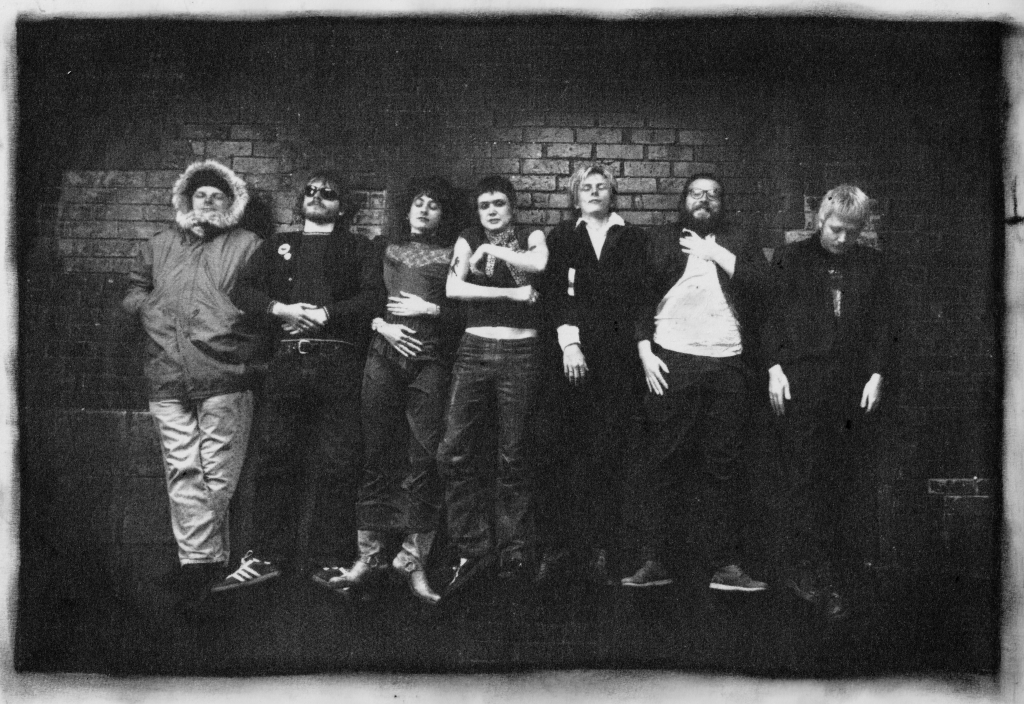
“When we say we’re split between two cities, people are really shocked by it. It’s like a very loving long-distance relationship.” Gina and Charlie from The Slow Country join me in a quiet corner of Manchester’s Gullivers, where they’ll play a hometown headline next month. They also played a sold-out homecoming show at London’s St Pancras Old Church a few weeks ago. The group’s seven members are divided across the country’s two most vibrant musical cities and they can very reasonably claim to be making some of the most compelling sounds coming out of either of them.
The band spent their formative months playing as many shows as they could get away with at Fuel Café and cycled through a number of sets before they thought about committing anything to tape. Charlie explains, “That was such an important place to us because it’s so forgiving. They were some of the best gigs because we were just figuring it out. There was a certain naivety to playing there” explains Charlie. “I think that’s really important for new bands. Just, like, gig and figure it out. We didn’t release any music until we’d played loads of gigs. We never wanted to rush into recording something that wasn’t quite right.”
By the time they released debut single ‘Walking Song’, their maximalist folk-rock debut which earned rare justifiable comparison to Fleetwood Mac and Nick Cave, members of the band had begun moving down to the capital. “It has meant we’ve been able to cover so much ground because we have a base up north and down south,” says Gina. “If you’re a Manchester band and you want to play a gig in Brighton or Southampton, how are you meant to be able to afford that?”
Having been able to say yes to twice as many gigs, The Slow Country’s live show is subsequently twice as good as the majority of bands who started at around the same time as them. They’ve implemented a policy of ‘whoever writes the song, sings the song’ and so with four songwriters in the band there’s no discernable ‘frontperson’ as they strut through their collection of uber-ambitious ‘slacker folk’ tracks. The charisma and the focus is split pretty equally across the crammed stage in a way that brings to mind the current incarnation of Black Country, New Road and makes them endlessly watchable. “We write everything with the live show in mind,” says Charlie. “You might want to write from the soul but the audience is ultimately just as important as you are – so we write with that in mind”.
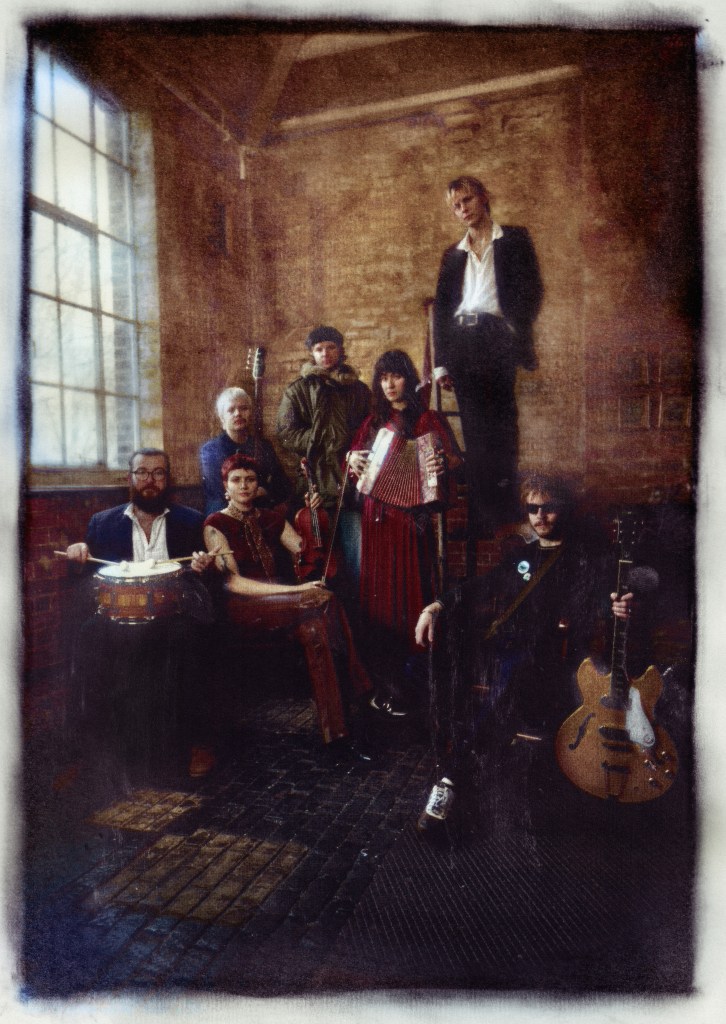
One of the standouts from the set is ‘Firing Line,’ the band’s first single on the massively in-form Manchester label Heist or Hit. It’s one that they’d been sitting on for a while and had taken various forms over the last couple of years. “We always felt like it went off live but every time we played it, it had a slightly different vibe. I don’t think it necessarily had found its way until we went to record it” says Gina. Charlie adds: “It becomes so precious to you because you wrote it so long ago, it can become harder to get right because you’re so worried about not doing the song justice.” Bill Ryder-Jones, a hero of the band, was enlisted on production duty to make sure they captured everything that made it such a long-term live favourite. “He’s so unique because he just gives you room to breathe. He knows exactly when to step in and when to let you do your thing” says Charlie. “The demo is quite drastically different to what we made with Bill. Initially it was quite post-punky and dark but I think he helped to give it much more heart and emotion. There was a moment where he was putting down some piano and I had goosebumps. I was seeing my hero play on a song I’d written on a living room floor in Whalley Range. And we got to go to the pub every night with him! So surreal.”
The other song that they recorded in those sessions, ‘In The Mud’, would find a more natural home on a record like Tender Prey than the widescreen Americana LPs that its predecessor evokes. Charlie calls the dramatic nature of the track an “outcry” and an “effort to loosen up and grab people’s attention” before Gina explains that it largely came together in the studio. “When we started that one, we were kind of tripping over each other. The big violin breakdown and the half-time drums weren’t in the demo, that all came in the studio. The band is always going through a metamorphosis of sorts, because we’ve got so many different members cutting across each other and coming up with all these ideas. It’s brilliant because it’s an amalgamation of so many different brains.”
“It shows a different side to us,” adds Charlie, “It’s got a bit of grit to it. It leans into our heavier side, which is something that we’re bringing out more.”
Reflecting on how they’ve developed between their initial self-released tracks and now, the pair agree that they’re leaning into the first part of the ‘slacker folk’ tag that they’re running with. “Early on, everything had to feel like it had a real purpose and meaning in the song” Charlie admits. “We’d been so trained to be like ‘no, do it again’ if you’d lay down something kind of messy. Bill was like ‘no, the mess is great, that adds to it.’ We’re trying to open up a bit and expression is definitely something that’s coming more into our writing. I think the process of recording with Bill has changed our approach”. “He also just instilled so much confidence in us all,” adds Gina.
It always feels kind of crass to try to project a band’s future, but it’s hard not to get excited about The Slow Country’s trajectory. They’ve already whipped up a lot of word-of-mouth hype in the country’s two most influential cities. They’re five songs in and have shown something new and exciting in each one of them, while never hindering the coherence of their sound. They have the backing of perhaps the most ascendant record label in the country and are operating with a heightened clarity and confidence gained from having found “their” producer. And they’re still fresh enough to be invited to all the industry-leaning ‘new music’ festivals this year. They’ve not even released their genuinely very good Christmas song yet either. “We won’t release any music after that,” Gina laughs. “We’ll just live off that for the rest of our lives.”


 Hard Of Hearing Magazine