
A look at the month’s best collections also including MPTL Microplastics, Cootie Catcher, Mandy, Indiana, Ninush and The Childminders.
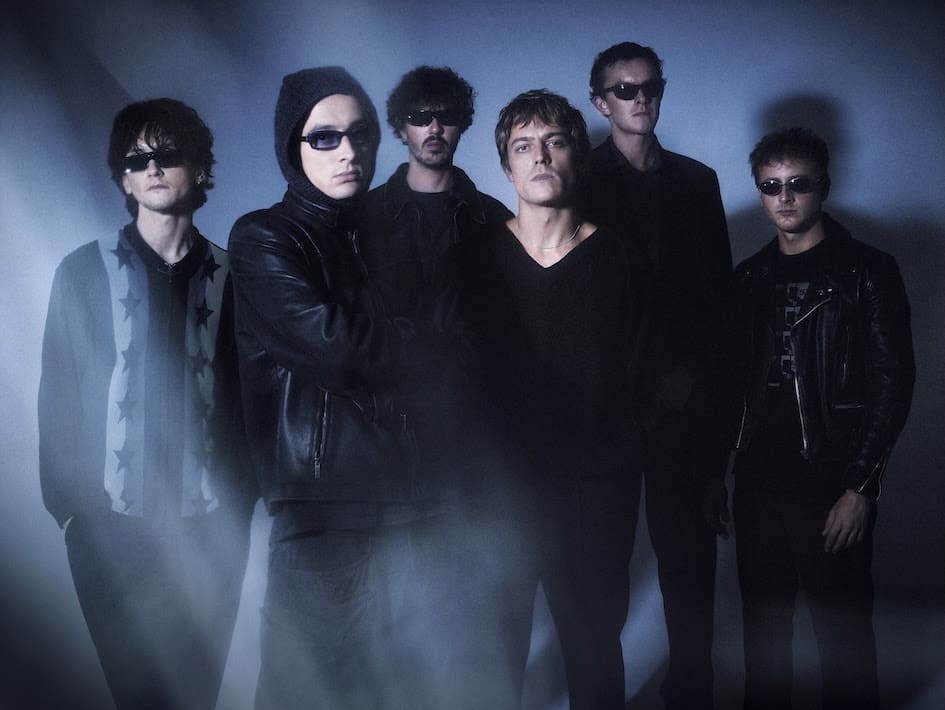
DEADLETTER – ‘Existence is Bliss’
DEADLETTER’s sophomore album ‘Existence Is Bliss’ arrives with a title that reads like a manifesto. The London-via-Yorkshire outfit operate under the cloak of serrated post-punk, but what distinguishes this record is not simply its angularity, it’s their appetite for scrutiny. Bliss, here, is never uncomplicated. Rhythm drives the album’s thesis. The basslines prowl, the drums are taut, almost martial. Guitars jab rather than bloom. Over this, Zac Lawrence, who has come a long way since projects like Zachary and The Hate, delivers his vocals in a tone that borders on clerical – part preacher, part cynic – dissecting modern malaise with eyebrows raised and arms firmly folded. Even the most danceable passages carry an aftertaste of unease, as though groove itself were suspect.
Tracks like ‘To the Brim’ and ‘It Comes Creeping’ illustrate the band’s control of tension: repetition used not as filler but as pressure on the listener. There are flashes of humour, but they’re deployed sparingly, preventing the record from sleepwalking into caricature. Instead, DEADLETTER maintain a disciplined severity, interrogating complacency, ego, and the absurdities of contemporary life. If there’s any qualms to be had, it’s that the album occasionally rides too closely to its aesthetic blueprint. There are moments where you’re begging for a rupture, but it doesn’t quite follow through. ‘Existence Is Bliss’ is less concerned with catharsis than it is with clarity. In a landscape overcrowded with bands all too often mistaking their own agitation for insight, DEADLETTER offer something a bit more considered. Their second act doesn’t dismantle the form, but it sharpens it – turning post-punk into a lens where everyday contempt is examined rather than merely performed. (Heather Collier)
Cardinals – ‘Masquerade’
Unleashing their debut album ‘Masquerade’, Cardinals sound like a band determined to test how much pageantry a guitar record can sustain before the curtains catch fire. The Cork group’s debut is theatrical, carefully bottling up the drama without ever tipping into parody. There’s a sense of young musicians reaching not just for hooks, but for legacy. The early stretch is disarmingly immediate. ‘She Makes Me Real’ and ‘I Like You’ lean into a kind of bruised romanticism that feels unabashedly direct, their melodies bright enough to offset the grain in the vocals. Yet even at its most open-hearted, ‘Masquerade’ doesn’t sit still. Accordion flourishes and wiry guitar lines give ‘St Agnes’ a restless pulse, as though the song might shake itself loose from its own structure.
What allows the record to finally take flight is its tonal pivot. The back half trades flirtation for friction. ‘Anhedonia’ and ‘Barbed Wire’ tighten the screws, interrogating numbness and self-doubt with a moodier palette. There’s a willingness to let songs brood, to stretch beyond tidy verse-chorus resolutions. When Cardinals turn toward history on ‘The Burning of Cork’, it feels less like a shoddy detour and more an essential echo of their lineage – personal, regional memory and the mirrored horrors of today woven into the genre’s musculature. Not every gamble lands cleanly. At times, the ambition outpaces the songwriting, and a few choruses hint at a grandeur they don’t fully achieve, but that imbalance is part of the intrigue. ‘Masquerade’packages a band in the act of becoming. Audacious, slightly uneven, and animated by the belief that guitar music can still feel expansive. It’s not a finished statement, but rather an opening argument. (Heather Collier)
Alice Costelloe – ‘Move On With The Year’
Released by Moshi Moshi, London-based singer-songwriter Alice Costelloe’s debut album is a cathartic reconciliation with love in the most testing of circumstances. Using her Moog synthesiser, alongside traditional instrumentation, Costelloe delves into the polarities of devotion, self-preservation and heartbreak. ‘Move On With the Year’ focuses its attention on Costelloe’s father, caught in the thralls of addiction – a phantom figure, very much alive, but untethered from her family. Confessional and intimate, the collection offers a cathartic reckoning with love, self-preservation and self-discovery. It is propelled by a devastating lyricism juxtaposed by lilting melodies and sweeping symphonic arrangements, a profoundly personal and strikingly clear-eyed confrontation of a past marked by grief and neglect. (Grace Palmer) [Abridged from full review available here]
MPTL Microplastics – ‘Sod in Heaven’
MPTL Microplastics’ first collection is an engrossing introduction to one of the most distinctive bands in London right now. Their shows appeal for the sheer spectacle of anywhere between five and nine performers hammering away at an unexpected array of instruments/non-instruments. Add to this the moshable catharsis of their more rhythmic numbers, which are spurred on by lyrical fragments in a cadence pitched somewhere between Mark E. Smith and David Thomas. These tunes can come out very differently live depending on factors like who is playing for the band that night and how patient the sound tech is feeling, so it is interesting to hear the definitive version of all this in recorded form. You catch the finer points of the lyrics, the appropriate balance of cello-to-synth-to-[unidentified scrap metal percussion] and most importantly the cohesion created between the wide scope of ideas the group are working with. Between the pummelling ‘Sod in Heaven’, ‘No More Dying’ and ‘Arabic Umlaut’, the record yaws into a series of slower-tunes which foreground the strange harsh beauty at the heart of the project. ‘Plastic Princess’ and ‘The Swollen Promise’ have something of that overlap of folk and post-rock associated with the likes of caroline and Shovel Dance Collective. At the same time, they retain a certain consistency with the brash clang of the noisier compositions elsewhere. The overall effect is like the billboard for some scrapheap utopia in the form of one of the most unique records you will hear all year. (Lloyd Bolton)
Cootie Catcher – ‘Something We All Got’
The third album by Cootie Catcher achieves something like indie rock perfection while simultaneously trying to reimagine the whole enterprise. Catchy melodies and wonderfully slacker vocals speak of debts to the best of Stephen Malkmus, Liz Phair and Grandaddy. But rather than simply aiming to reproduce these highs, the band actively look to innovate and reimagine. The surface of this record undulates with experimentation, from wobbling synth lines and unstable rhythms of ‘Loiter for the love of it’ and ‘Quarter note rock’ to the enchanting self-remixing of ‘Puzzle Pop’. Some tunes are more straightforward jangle rock, but they sit between slices of some of the most innovative and fun indie rock you’ll hear today. As a whole, it’s continuously rewarding and charming as hell. (Lloyd Bolton)
Mandy, Indiana – ‘URGH’
Fierce and apocalyptic, Mandy, Indiana offer up a revolutionary cry with their new album, ‘URGH’. This sophomore release (put out with NYC indie ‘Sacred Bones’) from the Anglo-French quartet is a deeply personal yet sharply political critique of contemporary dogmatism and societal chaos. An album that explodes, bleeds, and screams, the call-to-action of ‘URGH’ is more prescient than ever. With Simon Catling’s cacophonic synth layers and drummer Alex Macdougall’s unrelenting intensity, it assaults the senses and rips through the listener. Uncompromising in their sonic abrasiveness, Mandy, Indiana confront the laissez-faire with their liberatory refusal to be silenced. (Grace Palmer) [Abridged from full review available here]
Ninush – ‘The Flowers I See You In’
The debut EP from Ninush marks the arrival of a promising new voice among the proliferation of ambitious alternative artists emerging from the UK’s elite music schools. At times a little too demonstrative of its formal flourishes and musical theatre arcs, ‘The Flowers I See You In’ is nonetheless a strong collection of ideas and experiments that mark out an artist worth paying attention to. ‘Stardoll’ is a jaw-dropping and heartbreaking opener, which immediately focuses our attention on the string arrangements – a specialist subject for Ninush in her solo output and professional work too (a growing CV already includes work for Little Simz and JADE). Arresting arrangements similarly elevate the climactic ‘I Don’t Mind’ and the delicately magical closer ‘The End’. As a calling card, ‘The Flowers I See You In’ certainly offers a lot to get excited about. (Lloyd Bolton)
The Childminders – ‘Jesus Christ is from North Yorkshire’
Listening to The Childminders’ debut EP ‘Jesus Christ is from North Yorkshire’ you might start to wonder quite who has been minding these children? Mark E Smith? The Residents? All that can be said is god help them – or rather us – that someone has come along with the necessary wit to ask: what if Uncle Meat had a cheeky nephew with ADHD? What if you wanted to make an album less listenable than ‘Trout Mask Replica’, but you also wanted to smoke weed and fuck Jennifer Coolidge? What if you left your child at the after-school club for English Heretics and never bothered to pick them up? These are all difficult questions raised by The Childminders debut EP, ‘Jesus Christ is from North Yorkshire’. Yet beyond an amazing title and an eminently jarring list of inspirations, it is a project that stands on its own two feet as a chic yet self-consciously ugly debut in equal parts charming, sadistic and sleazy. There is a sustained frenzy to the EP’s shardy and half-song-like structure in which every track confounds the last with an utterly bastard lease of life. In stark relief to the bewitching minimalism of Reuben Pugh’s other project Troutflies, The Childminders offer an utterly unhinged and maximalist approach to both sonic structure and conceptual seduction. The future is here, the anaesthetics are wearing off, and we will soon be left with the horrible feeling that it was in the frenetic language of advertisement that modernism found its final repose. (Joey Hollis) [Abridged from full review available here]
 Hard Of Hearing Magazine