
The epic followup to ‘Prelude to Ecstasy’ moves with theatrical elegance undercut by raw vulnerability.
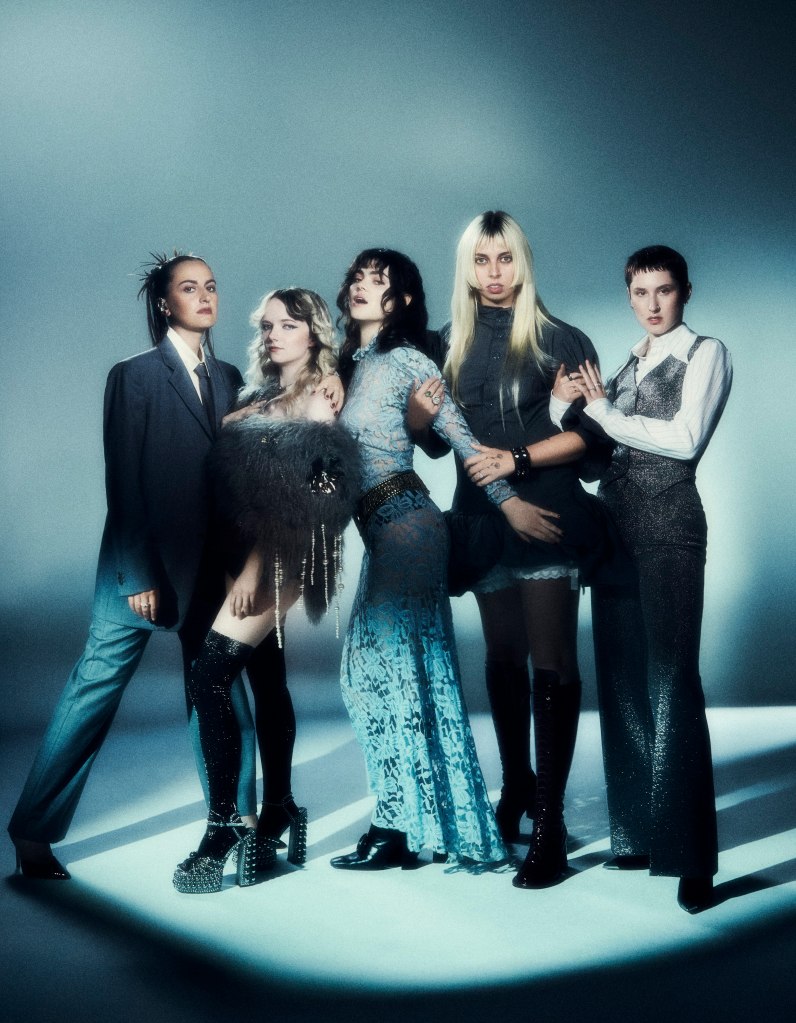
The Last Dinner Party do not wallow in contemporary heartache. Instead, they have conjured The Pyre: a place where fairytales of sailors, cowboys, and saints carry stories of floods, violence, and apocalypse. This is a space where broken hearts come to burn the past, where passion edges into obsession, and the killer holds you in loving arms. The London five-piece are neither afraid to be soft and emotional, nor to get dirt on their hands. ‘From The Pyre’ moves with theatrical elegance, yet its vulnerability remains raw. This is not a record that settles for being second best.
Much has changed since The Last Dinner Party first played The George Tavern in 2021. Since the release of their debut single, ‘Nothing Matters’, in 2023, the band’s ascent has been swift and shimmering, moving through the indie scene, across continents, and into the public consciousness. A year and a half after their acclaimed debut, ‘Prelude to Ecstasy’, the group returns with ‘From The Pyre’, a ten-song journey through myth, violence, and catharsis.
Violence and femininity crash and coil throughout ‘From The Pyre’, and The Last Dinner Party create a sound where softness and strength are synonymous. The album opens with ‘Agnus Dei’, a bass-driven groove laying an earthy foundation beneath Abigail Morris’ vocals. Moments of intentional grit cut through her controlled pitch, creating a sound that feels both powerful and deeply vulnerable. “Was that enough to make you come? / Am I enough to make you stay?” she asks, just before the apocalypse arrives. The question hangs not just in lyrics but in the very air between chords, like a fragile hope caught in sound. There is catharsis in how the instrumental outbursts allow everything to come crashing down around a broken heart. The vulnerability of questioning oneself is reflected on ‘I Hold Your Anger,’ where the line “I don’t know if I would be a good mother” cuts through the slow keys like a raw confession. It is a fragile admission set against visceral imagery that pierces with doubt and fear.
Ache and anger echo with elegance across the record, their weight carried in every trembling note and haunting silence. The agony of being ghosted is not treated as a quiet weep, but as a furious explosion on ‘This Is the Killer Speaking’. Piano notes shiver over a pulsing rhythm as an eerie fog settles across the track. The repeated lines, “Here comes your killer / Here comes your girl”, drip with dark irony. On ‘Rifle’, the violence is no longer metaphorical. Ascending percussion creates an unsettling atmosphere, while the lyrics offer visceral images of bloodshed. The cutting line, “Let this be the end”, is delivered with poise, and the contrast hits like a fist to the stomach. Ghosting and heartbreak do not only surface as themes, but reverberate through fractured rhythms and tense silences, pulsing like the uneven heartbeat of modern connection.
There is an allegorical quality to the record, where commonplace events are woven into a mythic landscape—part fairytale, part nightmare. Stories burn and symbols clash across the tracks. On ‘Count the Ways’ and ‘The Scythe’, religious imagery is embedded within indie rock grit. The opening lines of the former, “Let the snake bite / Let her crawl under your skin / Let it eat you from within”, glide through jagged guitar with a sense of unease. Yet the strings and vocal harmonies bring a strange catharsis, contrasting the visceral knife-in-the-heart analogy of the lyrics. On ‘The Scythe’, instrumental tension holds the quiet ache of waiting, like a breath caught between hope and loss, mirrored in the haunting plea, “Please let me die on the street where you live”. This sense of the mythic bleeds into ‘Woman Is a Tree’, where an almost ritualistic rhythm grounds the ethereal imagery in something earthy and physical.
‘Second Best’ opens with a fleeting choral arrangement that lifts the track into a mythic register. A steady bassline anchors the shifting dynamics, weaving through delicate keys and a driving guitar melody. Percussion drifts between restrained pulse and sharp urgency, echoing the emotional arc of the track. Morris’ voice carries a brittle edge, echoing the sharp sting of rejection, while tenderness flickers in the tremor of a held note, deepening the delicate fracture at the song’s emotional core. “You know I hate to lose / And maybe that’s why I’ve left you behind”, she sings, giving voice to the quiet agony of feeling second best in a love that is slipping away. On ‘Sail Away’, gentle keys move like waves across the ocean as the sailor drifts from the past. The line, “I am more than a girl / I am a seaside”, is as striking as it is tender, and angst and tenderness ripple beneath the surface.
By the time ‘Inferno’ arrives, The Pyre is already burning. In the world of ‘From The Pyre’, myth, violence, and femininity are not separate forces, but intertwined threads in a story that sings, bleeds, and survives. Melodic keys and pulsing percussion entwine with earthy bass, textured guitar riffs, and layered hums and harmonies, weaving a rich sonic tapestry. Morris’ voice moves like a thread through it all, from raw confessions and biting declarations to crystalline highs and soft poise. Across ten tracks, the band reimagine the feminine as mythic and the mythic as intimate, wielding violence not as spectacle, but as melody.


 Hard Of Hearing Magazine