
We look at the band’s debut EP and their thrilling launch show amid a run of grassroots venue dates this month.
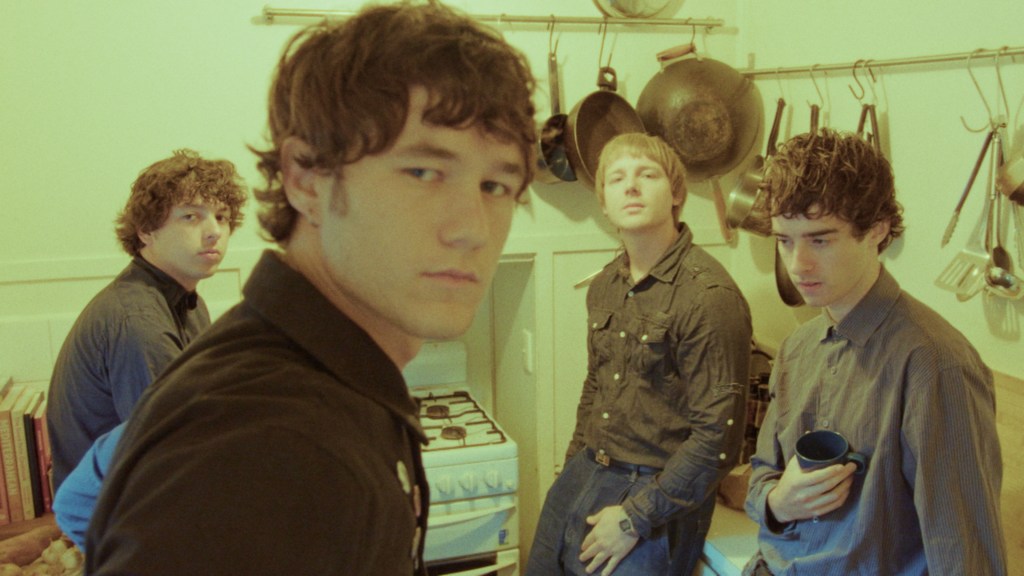
Since forming in 2020, Melbourne/Naarm-based Radio Free Alice have been carving out their place in the post-punk landscape with a sound that is sharp, urgent, and relentless. Currently tearing through the UK with a string of sold-out shows, the band’s new EP, ‘Empty Words’, captures the chaotic energy and emotional bite that has made them one of the most compelling live acts on the rise right now. On the day of the EP release, Wednesday 20 August, the band play Windmill Brixton with a set that unleashes their full force on a packed south London crowd.
The EP is brimming with raw emotion and nervy momentum. Opening with the title track, first released back in March, ‘Empty Words’ sets the tone with a biting line, “They say that everything has changed / But nothing has happened,” delivered with jarring, unfiltered vocals. The sharp, witty lyrics add a tangible texture to the gritty and tightly wound instrumentation, which is feverish without ever losing precision.
‘Toyota Camryn’ follows, opening with pounding drums and a driving bassline that lays the groundwork for a jagged guitar melody. Raw, immediate vocals lead the verse, cutting through with the line “I believe in violence, the violence of killing time”, a bold phrase that nails the track’s restless spirit. When the chorus hits, it lands with melodic clarity and razor-sharp control.
Radio Free Alice do not shy away from dissonance, letting noise and euphony collide, embracing the tension. On ‘Regret’, a searing guitar bridge slices through rasping yet melodiously restrained vocals, delivering lines of visceral confession that feel both intimate and confrontational. Then, closing the four-track EP, ‘Chinese Restaurant’ is led by a persistent guitar melody underpinned by steady percussion. Learmonth’s vocal performance carries a restrained depth reminiscent of The Cure’s Robert Smith, giving the track a timeless and unsettled energy.
The raw urgency of the EP reflects the chemistry of four creatively ambitious musicians in their early twenties, forging a sound unbound by genre. Radio Free Alice are building something entirely their own, vital, unfiltered, and alive with possibility.
Following the release of ‘Empty Words’, the band play a sold-out show at The Windmill Brixton, a venue which thrives on immediacy and raw tension, much like the band themselves. The south London pub and DIY stronghold has become a landmark in the city’s underground scene, known for fostering a number of the most innovative live acts of the past decade. It is in this charged atmosphere, walls sweating and speakers pushed to their limit, that Radio Free Alice take the stage.
They open with the EP’s title track. An edgy saxophone slices through the pre-show static with immediacy. Beneath the low ceiling, in front of a backdrop of gold tinsels, the band lock eyes with a crowd already pressing forward. The first guitar strum cuts through the nticipation, filling the venue with reverberating energy.
The four-piece consists of Noah Learmonth on vocals and guitar, Jules Paradiso on guitar, Michael Phillips on bass and saxophone, and Lochie Dowd on drums. On stage, they waste no time. From the first downstroke of ‘Paris Is Gone’, Paradiso’s guitar races ahead of the beat, speeding through verses like it’s chasing the chorus around a corner.
Though only released two weeks earlier, the lyrics to ‘Toyota Camry’ are already etched into the crowd’s memory, chanted back with visceral force. The contrast between sharp drums and dissonant guitar phrasing creates a jarring push-and-pull that tightens the air in the room. “You just don’t care for a life of killing time,” Learmonth sings, and the audience screams it back with a collective urgency that drowns out the monitors.
As the set barrels forward, it is clear Radio Free Alice thrive in this kind of raw, intimate environment. On ‘On The Ground’, Phillips’ thick bassline grinds beneath clipped, angular guitar strikes from Paradiso, each chord like a flinch, while Learmonth leans into the microphone stand, gripping the mic like it is a lifeline.
‘Chinese Restaurant’ makes its live debut tonight, and its transformation from recording to stage is one of deliberate volatility. Where the recorded track simmers with restraint, the live version indulges in unconstraint. The performance is unpolished and immediate, with the intensity and pace of the guitar strumming tightening with every cycle. Each riff lands more urgently than the last, pushing the song to a near-breakpoint before Dowd’s pounding pulse pulls it back from collapse. Steady, but never static.
The jarring quality of Learmonth’s vocals cuts through the screaming crowd on ‘2010’. “Is it a waste of time? / Begging in a gutter?”, he yells with clarity and raw frustration, relentless yet vulnerable. His voice quivers like an overdriven tape reel. The track’s emotional register feels unfiltered, those vocals anchoring the honesty of the lyrics.

Phillips hands the bass to Learmonth and picks up the saxophone again as the first notes of ‘Spain’ fill the venue. The sax adds a cinematic texture. Paired with the track’s gloomy, intimate lyrics, it sounds like the score to a dream teetering on the edge of a nightmare. “A strong slave is still a slave / Apartments are depraved / Shut your mouth and kiss me honey,” Learmonth sings with jarring composure. Dowd’s snare rolls in stiff, repetitive bursts, injecting the track with a tense momentum.
On ‘Look What You’ve Done’, the crowd shoves toward the front, arms thrown towards the low ceiling in the cramped room, mouths already shouting lines before Learmonth reaches the mic. Sweat drips from every person in the venue, both on stage and in the pit. Personal space no longer exists as 150 bodies melt into one, every heartbeat locked to the steering pulse of Phillips’ bass.
“Someone write down the lyrics!” someone shouts as Learmonth announces that the next track is unreleased. Titled ‘Rule 31’, the track is brisk and direct, carried by a pulsing bassline. Paradiso plays with piercing precision, guiding the guitar melody with unwavering control. The whole track moves like it is trying to shake something off, restless and vigorous, but just out of reach of resolution.
‘I Gotta (Fall in Love)’ is all sharp edges and urgency, its short run time delivered with pure force. Their presence on stage is like a live wire, erratic and electric. Dowd’s cymbals crash unpredictably, Learmonth pacing like he is chasing the next line before it escapes him. The syncopated drumming never lets the track settle, constantly shifting the listener’s footing.
‘Johnny’ is delivered with a sense of visceral urgency. Learmonth scrambles onto the speaker in front of him, one hand pressed flat against the ceiling as he leans into the crowd. “Johnny, can you call me?” he howls into the sweat-drenched room, but the crowd’s reply to the chorus hits harder as 150 voices deafen the monitors, not in unison, but in chaotic layers. There is an unconditional exchange of energy between band and audience, a feedback loop of catharsis and noise.
‘Waste of Space’ closes the set with ferocity and momentum. The band’s joy radiates off the stage as they wrap up the UK leg of their tour with their sixth sold-out show in London this past month. The energy is evident in every move: Learmonth’s clenched fists, Phillips’ bent knees, Paradiso pacing like a lit fuse, and Dowd playing like the kit might collapse beneath him. There is no space between stage and floor anymore, just one pulsing body of feedback and frenzy that builds with every note.
There is a restless vigour running through both the EP and this night in Brixton, one that captures the contradictions of youth. Where vulnerability collides with arrogance, disillusionment meets desire, the Melbourne/Naarm four-piece find clarity in the chaos and meaning in distortion. What begins as tension bursts into release, guitar lines flirting with collapse snap back into rhythm, every jagged lyric or frenzied bass riff lands with the force of something visceral: an ache, a shiver, a punch in the chest.
On ‘Empty Words’, Radio Free Alice confront the limits of language with biting precision. “I said I could kill them with my empty words or I could kill them all” is not just a lyric, it is a thesis statement for a band pushing back against meaninglessness with noise, dissonance, and the sheer force of presence. On stage, they embody this tension with songs that speed ahead of themselves without ever losing control. Their disarray is never accidental.
Together, the EP and the live show form a complete portrait that is neither polished nor resolved, but immediate and alive. It is a sound built on instinct, fueled by friction, and grounded in the kind of truth you only find when you scream it into a room full of strangers.

 Hard Of Hearing Magazine