
The singer-songwriter talks us through the creation of her new EP, her influences and the importance of singing at the top of her voice while riding around on her motorbike.

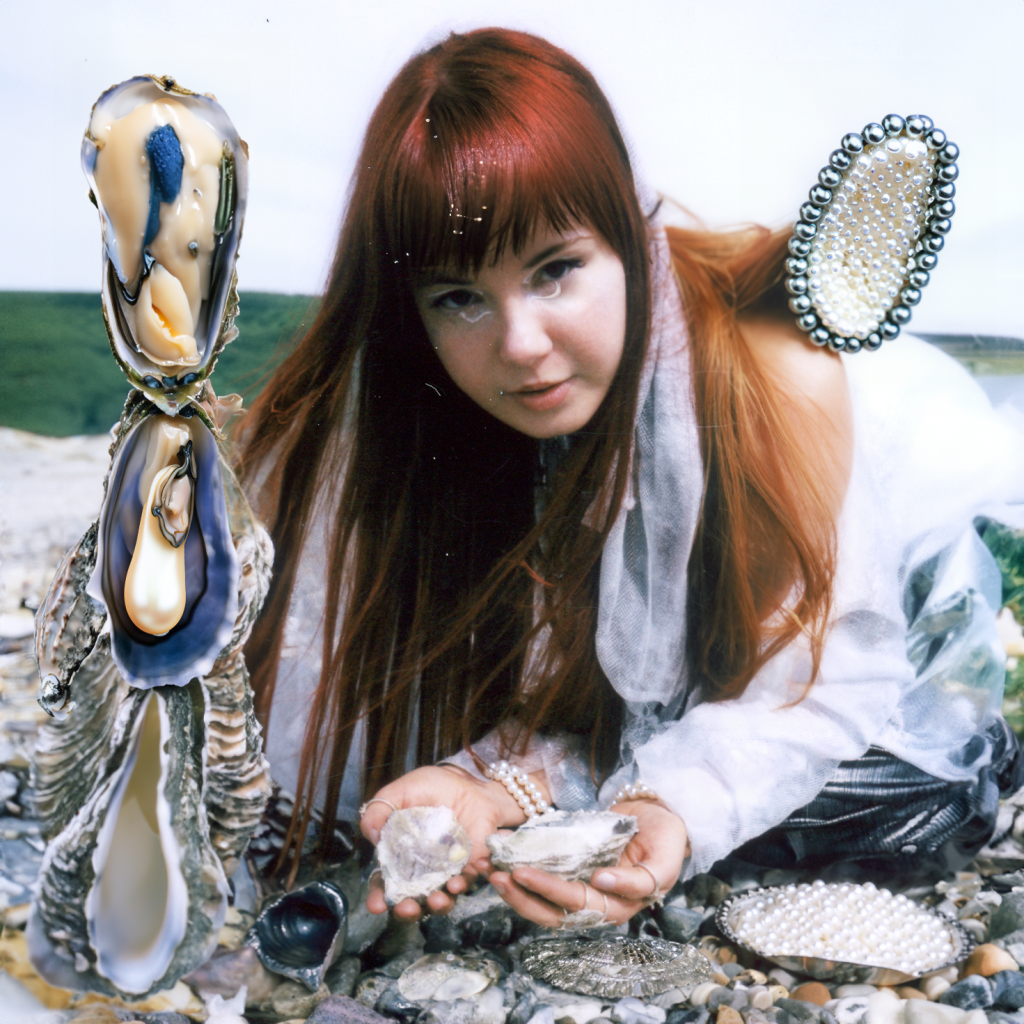
Aga Ujma is a singular voice in London’s music scene, producing music that reaches from folk influences into experimental original material with an international range of reference points. An education in classical music has also shaped her creative perspective and her instinct for crafting beautiful melodies. More recently, Ujma has been a regular collaborator with Broadside Hacks, adapting traditional pieces in her own remarkable style and building on her the folk influences of her upbringing.
Ujma’s voice alone is enough to create an expressive narrative, but married together with a rich sonic background she creates her own immersive world. Her incredible new EP, ‘345’, is a collaboration with producer Joel Burton, who also worked on Naima Bock’s phenomenal debut ‘Giant Palm’. Ahead of its release this Friday via Slow Dance, we talked to Ujma about a few of the influences on the creation of this wonderful collection.
What influence do you take from your engagement with folk music?
My biggest influence from folk is reflected in my vocal style. I grew up around a highlander white voice style of singing. The freedom, openness and joyfulness that comes from it is something that I strive for when I am singing. I also love the simplicity of storytelling, condensing complex but relatable human experiences into a couple short verses, and seeking help in metaphors connected to nature: mountains, rivers, moon, stars.
How was this EP made? Did the recording process influence the evolution of the songs?
These songs were written in the last couple of years, often while working on multiple other projects. What connects them together is they always felt like home, a safe space that I could lean on, especially during scary live performances. Playing them live in front of people influenced the music quite a lot – I would often experiment with changing lyrics or the length of song sections depending on the energy in the room. My skills on harp have improved during this time too so I was able to change and expand my instrumental arrangements.
How did working with Joel Burton shape the sound?
I find it exciting that we have very different musical backgrounds and very different musical tastes, while also being very honest about it. Joel’s perspective made the songs more three-dimensional: his musical ideas caused subtle elements to be more exposed. There is quiet clapping, body percussion, broken gameboy sounds, beautiful bass lines and improvised drum flourishes all thanks to him. It was also his idea to invite Finn Carter to play piano on ‘Cloud 9’, which I think took the song to a completely new level.
What was the toughest song to realise on this collection?
I think it was probably ‘345’ – it has a lot of moving parts that we had to capture and then make them make sense [in relation to each other]. I struggle with whatever happens between making a demo and taking the song to the studio – so often the magic is lost when you try to recreate the first version of the song. ‘345’ is especially precious to me as it was the first song I wrote for harp and I am very much attached to the first demo I made for it. I knew that for this EP I wanted to include a lot of home recordings and a lot of vocal takes and harp takes you hear in there were made in my bedroom. I wanted every part of the song to feel like a next chapter in a new location, but still cohesive, so Joel and I spent a lot of time trying to achieve it.
How have your more academic musical studies influenced the music you make as an artist?
Most importantly, it gave me a big library of references and lessons in music history. Studying counterpoint changed my perspective on (vocal) harmony forever and being around classical music professors probably makes me more snarky and judgemental than I’d like to admit. Classical music studies showed me how freeing the discipline can be in your relationship with your instrument – or how damaging it can be. In my own music practice, I go back and forth between the radical freedom of playing and trying to improve my technical abilities. I think there must be a sweet spot somewhere in there.
I understand you write a lot while cycling and walking, what is it about these processes that you feel inspires you? And how does that look in practice? Are you making voice notes, pausing to write?
It is easier to process my thoughts and feelings when I am on the move. The repetitive action frees up whatever is stuck on my mind – it could be unresolved situation, difficult feelings, or just a phrase, a beginning of a sentence. I often sing little melodies to myself when I am bored, going on a walk, or doing chores. When I had my motorbike I used to sing really loudly while driving to entertain myself, it is very freeing as no one can hear you anyway. Now I often do it while speeding on a Lime Bike. If I like something enough, I will make a voice note, or write down couple of sentences in the notes app.


 Hard Of Hearing Magazine