
Why are so many bands incorporating masks into their performances and visual work?
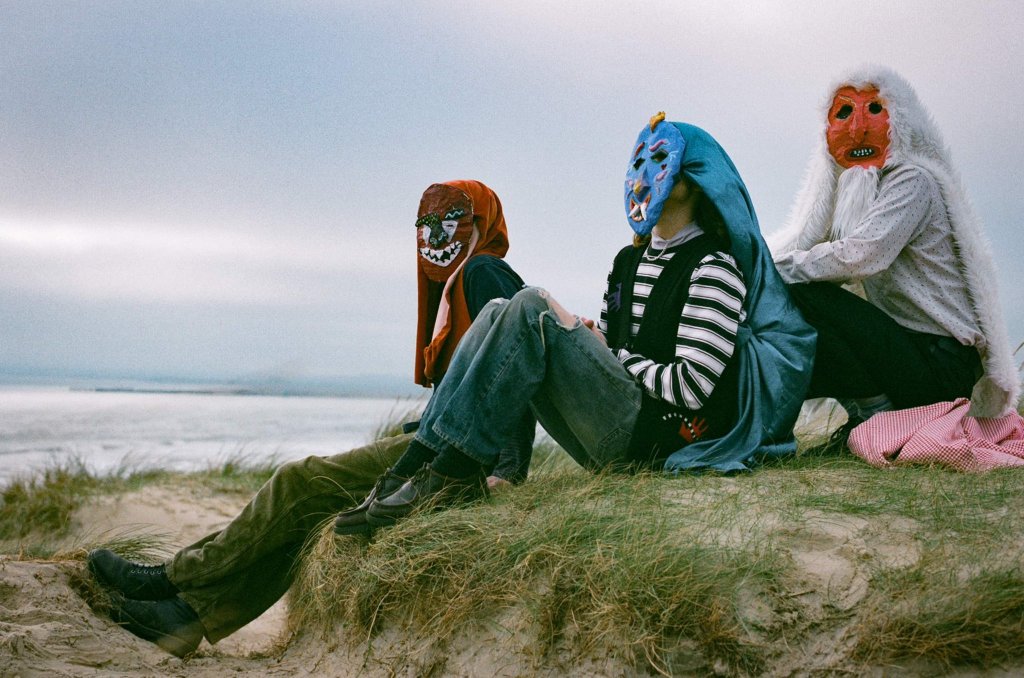
Over 2023, I spent many an hour shuffling at the back of dimly lit London music venues, itching for a dance. Live music for me, a fairly novice scenester, was about movement. On occasion, stiff yet remarkably attentive crowds had quelled my impulse to jump or shout at the bands cresting these carpeted stages. With a new stillness and a watchful eye, I noticed a pattern between the faces of the musicians, a tendency to incorporate some kind of stage prop, from papier-mâché headgear to woollen veils to aluminium tin cans to plastic hoods. Looking toward the stage I saw people wearing masks.
In the past few years and with increasing frequency, artists such as Hot Face, English Teacher, GOAT, Le Junk and Macie Stewart have incorporated masked elements into their stage performances. In some cases, the masks evolve into larger-than-life-sized anamorphic suits as seen in Mary and the Junkyard’s ‘Tuesday’ video, and at Jockstrap’s show at the Barbican. Aesthetically, the masks vary from outré, white, almost lunar discs to cubist faces veiled with fur. Perhaps most well-known are the bobbing red heads of Tapir! a symbol which most regular visitors of The George Tavern will be intimately aware of.
Masks used in performance is a tradition of old, dating back to ancient Greek theatres, Italian Harlequins, Japanese Noh masks, and the neutral operatic mask – compare the Phantom of the Opera to Hot Face’s resident dancer(s). The hidden faces of the actors served to dissolve the personality of the performer, appealing instead to a sensory universality. In theatre, the mask acts like a static close-up, where the unmoving expression of a single image dances around the imagination. It is an inhuman stillness, where an artist bears their soul without a face to convey emotion. Contemporary musicians are feeling this impulse.
The use of masks during live music and performance does have a unique emotive force. Chris Sievey’s persona Frank Sidebottom, who wore a giant paper mâché head whilst gigging in the 80s, shows how this impulse can be a satirical one, though it always comes with a tinge of discomfort. Perhaps by dimming the ego of the frontman, an expressionless yet clear focal point can emerge. Compelling the audience to look back at itself instead. The emotion of the music bounces from an impersonal animation back onto the listening audience. If you give a musician a mask, they may not show you their true face, but you may find yours.
It is important to note that the queer and LGBTQ+ music scene have been using masks in live performance long before its recent rise in popularity. An example of the moment would be Lynks’ often leather studded gimp masks, and those of Lee Bowery precede them.
In other sects of the music industry however, the coveted but constantly offending creature that it is, an emphasis on human faces has reached new heights. Well-meaning efforts towards representation have turned the physical body into a signal of progress. Whilst often paying little mind to the artists’ music nor the inequities they are subjected to. It feels as if the identity of a musician has become an essential condition for the enjoyment of their music, always subject to scrutiny and ceaseless tailoring. Such is the case for the musicians we know and those who are yet to come.
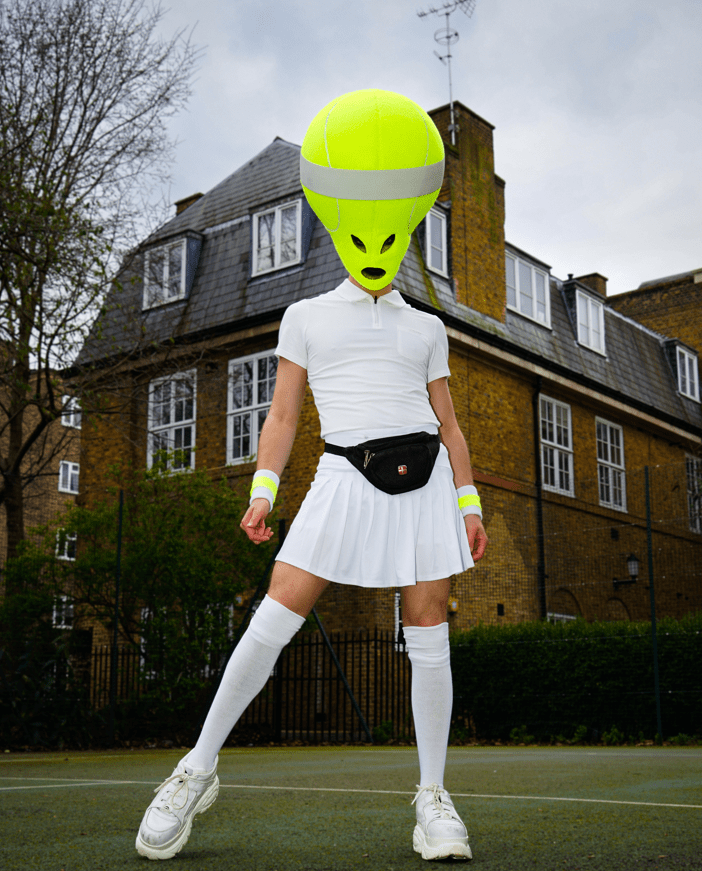
Emily Hubbard, who plays the cornet in Tapir! had this to say on the experience of wearing a mask (without eyeholes) in the band:
“It’s a surreal experience, you know there are people looking at you but there’s a sense of solidarity that there are five other band members also looking at the red, chicken wire insides of the pilgrim head, it’s quite nice. It individualises your experience on stage, it gives you a moment to yourself, you forget that there are people there, its bit like a limbo”.
Saying goodbye to the Liam Gallaghers of yesteryear will be an eager wave off for many, but I sense that this focus on individual identity/style tangibly hollows out any new leading front-persons. As the year 2000 slumps further and further away from us, so does the advent of social media. Identity-led-music and the internet are deeply linked. Designed to encourage facial showcasing, identity curation and constant engagement from its users. Sound familiar?
Enter the mask…
Whether as pursuit of anonymity or equality or just because it looks cool, the use of masks in live music is characterising the London music scene of the 2020s as one which wants to experiment. Playing with how audiences interact with their work and arguably how the musicians embody their work themselves.



 Hard Of Hearing Magazine