
With two brief and uniquely collaged releases newly released, the pair demonstrate the free-thinking formal innovation nurtured by modern DIY music-making channels.

Discussion around the latest British folk revival has intensified over the past year as its influence has reached deeper and deeper into the scene. Spearheaded by the torchbearing spirit of Broadside Hacks’ releases, concert nights and open mics as well as the experiments of groups like Shovel Dance Collective, it permeates many of the most exciting acts coming out of Britain, at the heart of the magic of The New Eves and Naima Bock.
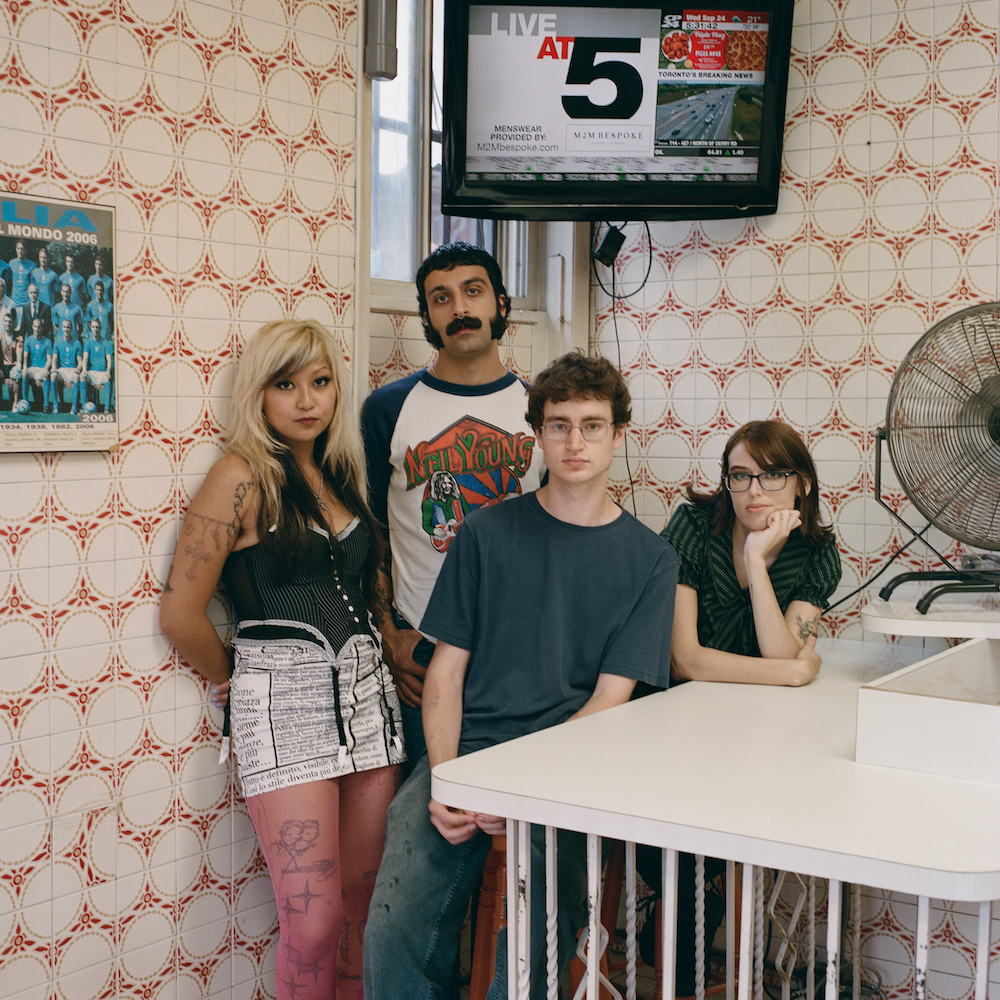
The range of such tangents and experiments opens our ears to the sorts of rabbit holes into which Milkweed, a new signing to Broadside Hacks’ label, are most confidently darting into. The duo are undeniably modern, assimilating aspects of folk tradition into compositions that bear as much resemblance to electronic and ambient music, while also acting like academic studies. This sense is deepened because each release of theirs is built around a specific folkloric text. Their newest collection ‘Folklore 1979,’ is a dazzling patchwork, its final form is as much musique concrète as it is folk song.
At ten minutes in length, it feels like a miniature version of the form Shovel Dance Collective stretched out on their brilliantly trailing ‘Water is the Shovel of the Shore,’ which veered between sea shanties, internationally sourced folk songs and ambient recordings taken along the Thames. The text of ‘Folklore 1979’ is all sourced from an academic journal published by the Folklore Society, some audio coming presented as American nature documentary and some in song. ‘My Father’s Sheep is Dead’ is the musical standout, with a more conventional song form and irresistible hook, presented more like a looped sample. Even here, however, we have to play by Milkweed’s rules, as it crackles through abrupt cuts and non-musical interruptions.
Leaning further into the musique concrète experimentalism, Laura Kampman’s newly released EP ‘Coming into daily life’ is a coincidental companion piece, the two forming a beautiful pendant pair. Each is an example of the best of DIY album-making and the free-spirited attitude to album construction that comes with it. The EP comes in two parts, roughly ten minutes apiece. A composer as much as a songwriter, the Dutch artist’s work does not come so much from a folk background as an artistic one.
Kampman’s collection is built around a scattering of songs and non-songs, the unifying thread being her discovery of them on the archives of her voice memos. A period of grief following her father’s death inspired this digital introspection, and the resulting collection weaves memories together with the vitality of the present, offering the listener their own space upon which to project a response. Though it is not aiming to be a ‘folk’ release, Kampman’s candidly bare adaptation of Robbie Williams’ ‘Angels’ at the centre of the opening track elevates the cliché end-of-night singalong to something like a folk song, given its long public history and the Kampman weaves around her personal story like ivy.
Both released in the past week, these two releases show a modern imagination about form and instinctive eclecticism. Milkweed’s sound is revelatory, even within the current folk scene that is bursting with ideas. Kampman suggests similar conclusions, reached by a different route.

 Hard Of Hearing Magazine