
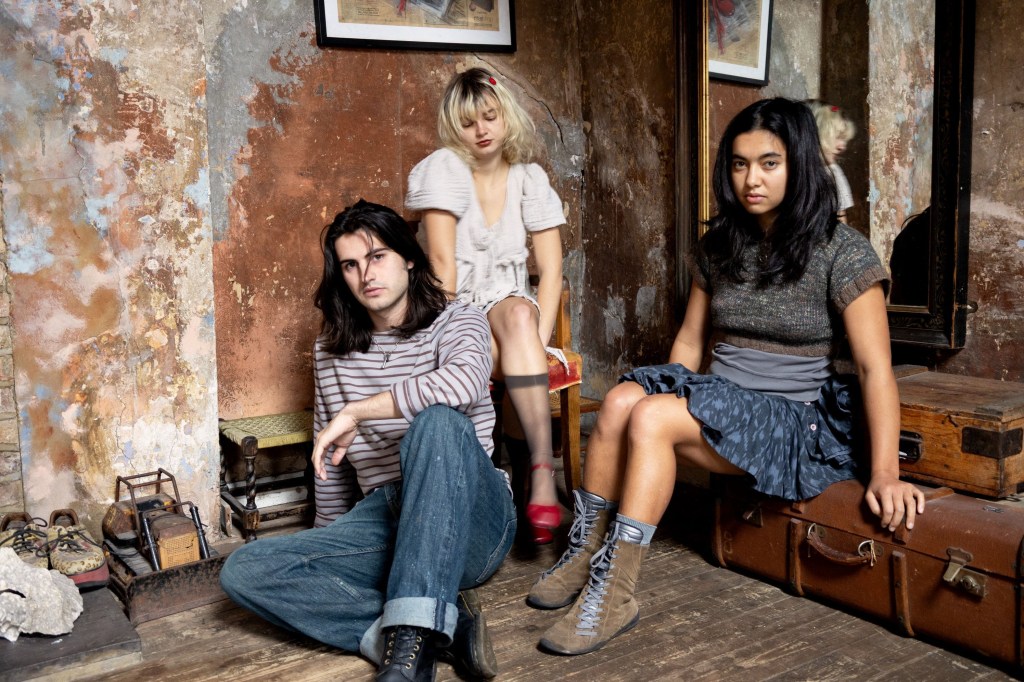
The Oxford four-piece draw on classic and post-modern gothic images and build their heavy-as-hell sound from favourite 80s and 90s touchstones.

‘Reanimated’ is an immediate connection to a heavier world. Recorded as live, “for as little as possible,” the songs are abrasive and relentless. They are also decisively straight to the point, with none breaching the five-minute mark. Singer and guitarist Richard Bell (also one half of Oxford’s widely loved DIY promotions team Divine Schism) speaks of the record “sound[ing] like all the bands I’ve loved my whole life [eg. Fugzi, Drive Like Jehu, Pixies and also Pavement and Swervedriver],” reflecting a humility about the sound but also a confidence in the band’s ability to synthesise something individual out of these influences.
The title track opens with a tremendous, fizzing guitar sound before kicks into a driving beat that lays beneath shaking, battle-worn vocals. In form, it draws heavily on these rocking 90s forms, but also brings modern and idiosyncratic detail, as in the post-hook instrumental break and the repeated line – which shines with the faintest glint of self-pitying humour – “I am spiralling, yeah… I’m spiralling.”
The titular idea of “reanimation” finds expression throughout the EP. The lyrics are gothic, but not stuck in backward-looking pastiche, incorporating as much contemporary horror as classic imagery. On ‘Thrum,’ the lyrics are said to be inspired by Sun Yuan and Peng Yu’s art installation ‘Can’t Help Myself,’ in which a robot arm makes Sisyphean repeated attempts to clear up a blood-like liquid. The music on this track feeds the imagery, the staggering guitar of the verses moving with the awkward rigidity of a zombie. Like Yuan and Yu’s work, this sound enlists technological equipment to imitate human rhythms with terrifyingly rigid results: the human spirit reanimated.
This debut release is a powerful beast, weighty without being bloated by its ideas. Still relatively new to the scene, Sinews are growing and growing, this EP coming as a document of their volcanic first phase.


 Hard Of Hearing Magazine